
If you’re checking the clock right now wondering how much time is left until 3:30 PM, here’s the quick answer. Take the current time, subtract it from 3:30 PM, and that gap is your wait. If it’s 2:45 PM right now, you’ve got 45 minutes left. If it’s 3:15 PM, only 15 minutes stand between you and that mark. Simple as that. Now let’s dig into why this tiny question matters so much and how to make the wait actually work for you.
Why So Many People Ask: How Long Until 3:30 PM
People don’t search this question because they love math. They search for it because something real is waiting on the other side of that clock. Maybe it’s the end of a shift, a school pickup, or a call from someone who matters.
Time feels different when you’re waiting on it. A countdown to a doctor’s appointment feels slower than a countdown to your lunch break, even though both are just numbers on a clock. That’s just how brains work.
This question pops up constantly in search bars because it touches so many parts of daily life, from work meetings to sports practice to a flight boarding gate. It’s less about the number and more about what happens right after.
How to Calculate How Long Until 3:30 PM
Doing this by hand is easier than it sounds. Look at your current time, then count forward to 3:30 PM in your head or on paper.
Here’s a simple breakdown people use:
• From 2:00 PM, you’re 1 hour 30 minutes away
• From 2:30 PM, it’s exactly 1 hour
• From 2:45 PM, you’ve got 45 minutes
• From 3:00 PM, only 30 minutes remain
• From 3:15 PM, just 15 minutes left
• From 3:29 PM, it’s down to 1 minute
Once the clock hits 3:30 PM, you’re done counting. If your local time already shows something later, like 5:00 PM, then today’s window has closed and you’re now counting toward tomorrow instead.
How Long Until 3:30 PM Today Using Common Examples
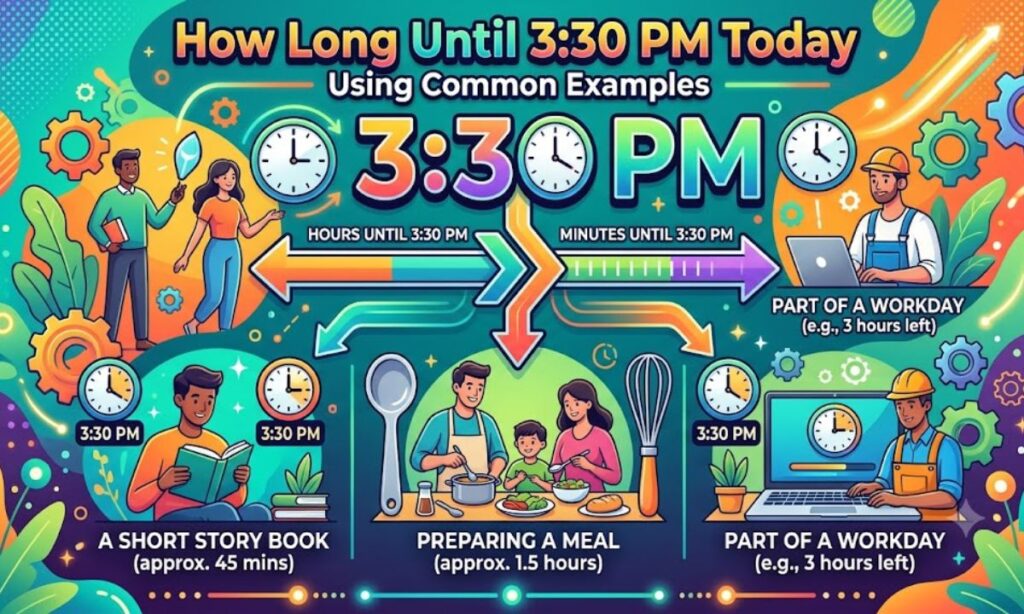
Numbers stick better with real examples, so here’s a quick time difference table you can glance at.
| Current Time | Time Until 3:30 PM |
| 1:00 PM | 2 hours 30 minutes |
| 1:45 PM | 1 hour 45 minutes |
| 2:00 PM | 1 hour 30 minutes |
| 2:20 PM | 1 hour 10 minutes |
| 2:40 PM | 50 minutes |
| 2:55 PM | 35 minutes |
| 3:05 PM | 25 minutes |
| 3:20 PM | 10 minutes |
| 3:28 PM | 2 minutes |
Say your clock reads 2:20 PM right now. That’s 1 hour and 10 minutes to go, enough time to wrap up a task or grab a snack before you need to be ready.
This kind of table works well because your eyes catch the pattern fast. No math required, just a quick scan down the list to find your spot.
Using a Countdown Timer Makes Life Easier
Doing subtraction in your head is fine once. Doing it every five minutes gets old fast, which is exactly why a countdown timer exists.
A good digital timer updates itself every second without you lifting a finger. You glance at your phone or laptop and the number is already sitting there, accurate down to the second.
People lean on tools like a live countdown, a reminder timer, or even a basic countdown widget pinned to their browser. It removes the guesswork and the constant clock checking that eats up focus.
Honestly, once you set a timer and walk away from it, you get your attention back. That’s the real win here, not just knowing the number but not having to think about it anymore.
Why Local Time Matters
Not everyone hits 3:30 PM at the same moment, and that trips people up more than you’d think. Someone in one time zone could be wrapping up their afternoon while someone else is just starting theirs.
This becomes a real headache during online meetings or classes that span different regions. What’s 3:30 PM for you might be an entirely different hour for someone joining from across the globe.
Most solid countdown tools detect your local time zone automatically and adjust the number for you. That one feature alone saves a lot of confused messages and missed calls.
If you’re scheduling anything with someone outside your area, always double check both clocks. It takes ten seconds and saves you the awkward wait, it’s already tomorrow for you moment.
ALSO REAS THIS:https://measureaxis.com/2-pm/
Understanding Time Formats
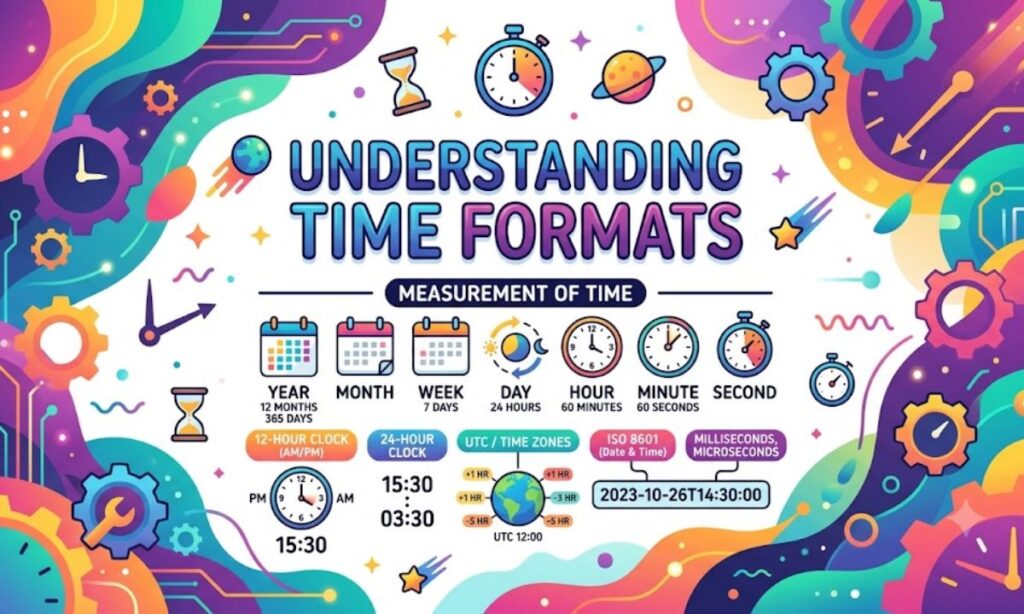
3:30 PM looks different depending on where you are and what system you’re using. In the 24 hour format, it becomes 15:30. In military time, that’s written as 1530.
Here’s how a few other times convert, just so the pattern is clear:
• 2:30 PM becomes 14:30
• 6:30 AM stays 06:30
• 10:30 PM becomes 22:30
• 12:00 PM noon becomes 12:00
• 12:00 AM midnight becomes 00:00
This matters more than people realize, especially for travel bookings, hospital schedules, or anything tied to flights and international business. Mixing up AM and PM or misreading a 24 hour clock has caused more missed flights than anyone wants to admit.
Everyday Reasons People Wait for 3:30 PM
Ask ten different people why 3:30 PM matters to them and you’ll get ten different answers. That’s part of what makes this such a common search.
Some of the most common reasons include:
• School dismissal
• Afternoon workout or gym session
• A scheduled virtual meeting
• Coffee break with a coworker or friend
• Medical or dental appointment
• Flight check in window
• Family dinner prep starting
• Birthday party kickoff
• Job interview
• Project deadline or milestone
• Homework or study session
• End of a long commute
For a parent, 3:30 PM might mean freedom, the moment kids come running out of school. For someone else, it might mean pressure, the start of a presentation they’ve been dreading all week. Same clock, completely different feelings attached to it.
How Long Until 3:30 PM Tomorrow?
If it’s already evening, say 6:00 PM or 9:30 PM, then 3:30 PM today has already come and gone. Your countdown now points to tomorrow’s 3:30 PM instead.
Here’s how that math plays out:
| Current Time | Time Until Tomorrow’s 3:30 PM |
| 6:30 PM | About 21 hours |
| 9:00 PM | About 18 hours 30 minutes |
| Midnight | 15 hours 30 minutes |
| 4:00 AM | 11 hours 30 minutes |
| 10:00 AM | 5 hours 30 minutes |
So if it’s currently 9:00 PM, you’re looking at roughly 18 hours and 30 minutes before that clock hits 3:30 PM again. A future time calculator does this instantly, but knowing the logic behind it helps when you don’t have one handy.
Digital Tools That Simplify Time Tracking
Beyond a basic countdown, there’s a whole toolbox out there built for people who live and die by their schedules. A duration calculator works great when you need to measure time between two specific points, not just to a fixed target.
Other handy options include:
• Clock calculator apps
• Calendar reminders with alerts
• Smart assistant voice reminders
• Wearable device notifications
• Browser countdown extensions
• Built in phone alarm clocks
Combine a couple of these with basic task management habits and you stop needing to check the clock every few minutes. The tool does the watching so you can do the working.
Real-Life Situations Where Every Minute Counts
Sometimes the countdown isn’t just background noise, it’s the whole game. A teacher glancing up at 2:50 PM knows she’s got exactly 40 minutes to finish today’s lesson plan.
A sales manager checking the clock at 3:15 PM before walking into a client call feels that 15 minute window a lot differently than someone just waiting for their coffee break. Same amount of time, very different pressure.
And then there’s the parent standing outside the school gates at 3:25 PM, watching the minutes tick by before the doors finally open. Five minutes has never felt longer or shorter depending on your mood that day.
Planning Around 3:30 PM

If your afternoon revolves around hitting that 3:30 PM mark, working backward usually beats scrambling forward. Break your remaining time into small chunks instead of one big blur.
| Task | Suggested Time |
| Clear inbox and messages | 2:00 PM |
| Finish focused work block | 2:30 PM |
| Prep notes or materials | 2:45 PM |
| Quick review or run through | 3:15 PM |
| Tie up loose ends | 3:25 PM |
| Ready to go | 3:30 PM |
This kind of backward planning takes the panic out of a deadline. Each task gets its own space instead of everything piling up in the last five minutes.
How Countdown Calculators Actually Work
Under the hood, a countdown calculator isn’t doing anything magical. It just checks your current time, your date, and your time zone, then compares all of that against your target time.
From there it keeps recalculating the time remaining every single second, breaking it down into hours, minutes, and seconds so you always see a fresh number.
It’s plain arithmetic running on a loop, nothing fancier than that. But watching those digits count down still hits differently than doing the math yourself, there’s something satisfying about it.
Time Awareness Improves Productivity
Knowing you have exactly 24 minutes left before 3:30 PM does something psychological that vague guessing never does. It nudges you to actually use the time instead of losing it.
People who build strong time awareness habits tend to procrastinate less and finish tasks closer to their actual deadlines instead of scrambling at the end.
A few habits worth building:
• Setting a phone alarm for key checkpoints
• Using recurring calendar reminders
• Tracking work sessions with a productivity timer
• Writing out a simple daily schedule
• Reviewing your routine once a week
None of these are complicated. They just work because they turn a fuzzy feeling of I should probably finish soon into a solid number you can actually act on.
Examples Across Different Dates
Sometimes the countdown isn’t about today at all. You might be circling a future date on your calendar where 3:30 PM matters, like a wedding, an interview, or a flight.
Common examples people plan around include a specific Saturday, a birthday two months out, a holiday weekend, or the start of a long awaited vacation. The math stays exactly the same no matter the date on the calendar.
Whether that target is tomorrow or three months from now, the formula never changes. Subtract now from then, and you’ve got your answer.
Frequently Asked Questions
How many hours until 3:30 PM?
It depends on what time it is right now. Check your local clock, subtract from 3:30 PM, and you’ll have your exact number.
What time is 3:30 PM in military time?
That’s 1530, written as 15:30 in the 24 hour format.
What’s the easiest way to calculate time until 3:30 PM?
Use a live countdown timer or a basic time calculator. They update automatically so you’re never doing the math yourself.
Why does my countdown differ from someone else’s?
Different time zones. Two people in different regions will always see different numbers even if they’re both aiming for 3:30 PM.
Can I set a reminder for 3:30 PM?
Yes, almost every phone lets you set a recurring alarm or calendar alert so you never have to keep checking manually.
What if it’s already past 3:30 PM today?
Then you’re counting toward tomorrow’s 3:30 PM instead, which usually lands somewhere between 15 and 24 hours away depending on the current time.
Making Better Use of the Waiting Time
Instead of refreshing the clock every few minutes, put those final stretches of time to work. Clear out a few emails, stretch before a workout, or prep notes for whatever’s coming next.
Small wins during the wait make the time pass faster and leave you walking into that 3:30 PM moment already ahead instead of scrambling.
Conclusion
At the end of the day, asking how long until 3:30 PM is really about something bigger than a number. It’s about the meeting, the pickup, the appointment, or the moment waiting for you on the other side of that clock.
Whether you calculate it by hand or let a countdown timer do the heavy lifting, the goal is the same. Use the time you’ve got left with a little more intention, and that 3:30 PM mark will show up right on schedule, just like it always does.