
So how much is 10kg really? It’s about 22 pounds, roughly the weight of a car tire or a medium sized dog. That’s the short answer. Now let’s break down exactly what that feels like in real life.
If you’ve ever stood in an airport staring at a luggage scale, sweating a little, you know why this question matters. Or maybe you’re at the gym trying to figure out which dumbbell to grab. Or you just bought a bag of dog food and your arms are already complaining.
10kg shows up more in daily life than most people realize. Once you know what it feels like, you’ll never have to guess again.
A Brief on How Much is 10kg?
Let’s keep this simple. 10 kilograms equals about 22 pounds. That’s roughly two large bags of flour stacked together.
Think about carrying a medium sized dog in your arms. That tired feeling in your shoulders after a few minutes? That’s what 10kg feels like.
Or picture a car tire without the rim. Most people struggle to lift one with just one hand. That’s your weight reference for the rest of this guide.
How Heavy is 10KG?
Here’s the exact math so you never have to look it up again.
10 Kg = 22 Pounds
That’s it. No complicated formulas needed. Just remember this one number and you’re set for grocery shopping, gym sessions, and packing suitcases.
Now let’s get into the fun part. Real objects you can actually picture in your head.
ALSO READ THIS:What Does 60 Feet Look Like? 15 Real Comparisons
Common Things That Weigh 10Kg
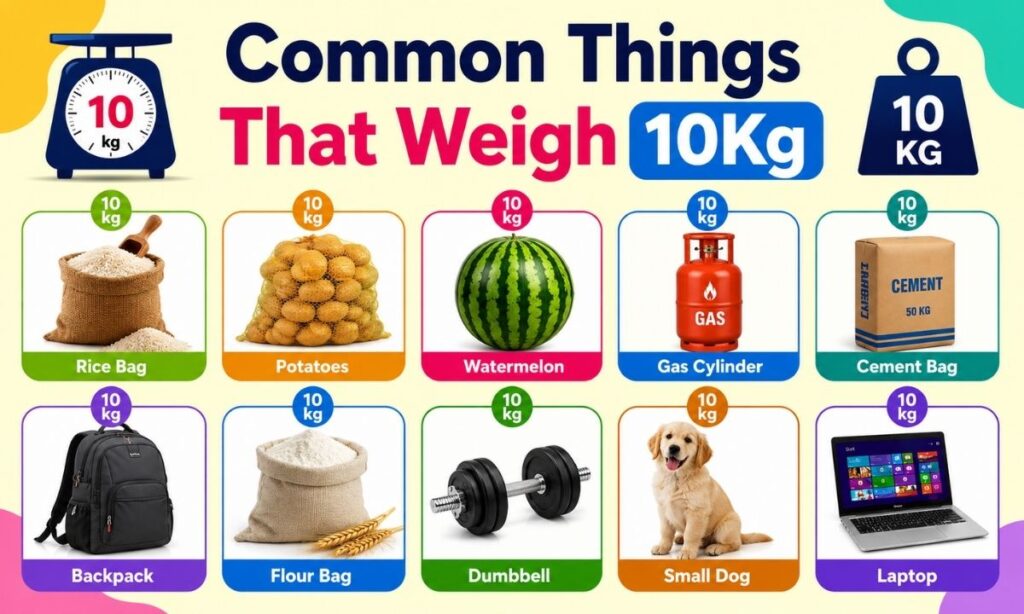
Below are 11 everyday items that hit that 10kg mark. Some are exact matches. Others are close enough to give you a solid mental picture. Either way, you’ll walk away knowing exactly how heavy 10kg feels.
1. Bag of Dog Food
A standard bag of dog food clocks in right around 10kg. If you own a pet, you’ve probably hauled one of these from the store to your car and felt your arms shake a little.
It’s heavy, but most adults can manage it without much trouble. Funny enough, this is basically the same weight as some small dog breeds, like a Dachshund. So carrying the bag is like carrying a second dog.
Quick tip: Keep the bag in an airtight container once opened. It stays fresh longer and keeps bugs out.
2. Two Gallons of Paint
One gallon of paint weighs about 5kg. Grab two, and you’ve got your 10kg right there.
Anyone who has painted a room knows exactly how heavy those cans feel by the third trip up the ladder. A single gallon usually covers around 400 square feet, so two gallons can handle a decent sized room without much waste.
Quick tip: Always stir your paint well before using it. Skip this step and you’ll end up with patchy color on the wall.
3. A French Bulldog
A full grown French Bulldog weighs close to 10kg on average. These little dogs are solid and muscular, way heavier than they look.
Some Frenchies push past 10kg, landing closer to 12 or 13kg depending on the dog. Here’s a wild fact though. Frenchies aren’t great swimmers because their heavy heads throw off their balance in water.
Quick tip: Always use a harness instead of a collar for walks. It protects their neck and back from strain.
4. A Medium Sized Suitcase
Packing for a trip? A fully packed suitcase with clothes, shoes, and toiletries lands around 10kg pretty easily.
This is exactly why airlines set weight limits. Go over that number and you’re paying extra fees at the counter, which nobody wants. Believe it or not, the heaviest suitcase ever checked weighed 1,100kg. Someone actually packed a car inside it.
Quick tip: Roll your clothes instead of folding them. You’ll fit way more into your 10kg limit this way.
5. A Car Tire
Ever wonder what does 10kg look like in something you’d find in your garage? A standard car tire without the rim weighs close to 10kg.
Anyone who has changed a flat tire on the side of the road knows this weight firsthand. It’s awkward to lift and even harder to balance while you’re wrestling with lug nuts. Early rubber tires were actually solid, not filled with air. Just imagine how rough those car rides must have been.
Quick tip: Check your tire pressure once a month. It saves gas money and keeps you safer on the road.
6. 24 Pack of Soda Cans
That full 24 pack of soda you grab at the grocery store weighs almost exactly 10kg. Carrying it from the shelf to your cart is basically a mini arm workout.
If you stacked that many cans straight up, they’d reach about 4 feet tall. Next time you’re at the store, picture that height and you’ll understand why your arm feels tired by the checkout line.
Quick tip: Store soda somewhere cool and dark. It keeps the fizz stronger for longer.
7. A Big Watermelon
A large watermelon can easily weigh up to 10kg on its own. If you’ve ever hauled one home from a farmers market, you know the struggle is real.
Don’t have a big one? Two smaller watermelons together usually add up to the same weight. For some perspective, the heaviest watermelon ever grown weighed 159kg. That’s 16 times heavier than the one in your fridge right now.
Quick tip: Give the watermelon a tap. If it sounds hollow, it’s ripe and ready to eat.
8. A 10kg Dumbbell
At the gym, a 10kg dumbbell is one of the most common weights you’ll see on the rack. If you’ve ever done a set of bicep curls with one, you already know exactly how this weight feels in your hand.
It’s heavy enough to challenge you but light enough for most beginners to start with. Ancient Greeks actually used stone weights called halteres for exercise, which were basically the first version of dumbbells.
Quick tip: Start with a lighter weight first and work your way up. Jumping straight to heavy weights is a fast way to get hurt.
9. Four Bricks
A single brick weighs around 2.5kg, so four of them together land right at 10kg. Anyone who has done home renovation work knows how solid and heavy bricks feel, even in small stacks.
Here’s a fun number to chew on. The Great Wall of China used about 3.9 billion bricks. That’s roughly 950 million sets of four, if you’re keeping score.
Quick tip: Always wear gloves when moving bricks. The rough edges can tear up your hands fast.
10. Two Bowling Balls
Walk into any bowling alley and you’ll notice the balls range in weight, usually landing somewhere between 4.5kg and 7.26kg each. Grab two on the heavier end and you’ll land right around 10kg total, give or take depending on which balls you pick.
Bowling balls are a great way to picture this weight because you can hold one in each hand and instantly feel the difference between light and heavy.
Quick tip: Bend at your knees, not your waist, when picking one up. Your back will thank you later.
11. School Backpack
A school backpack stuffed with textbooks, notebooks, and supplies can easily hit 10kg by the end of the day. No wonder so many students complain about sore shoulders after school.
For some wild context, the heaviest book ever made weighs 1,420kg. That’s about 142 times heavier than the backpack a kid carries to class every single day.
Quick tip: Look for a backpack with padded straps. It spreads the weight out and saves your shoulders from strain.
Simple Ways to Estimate 10kg Without a Scale
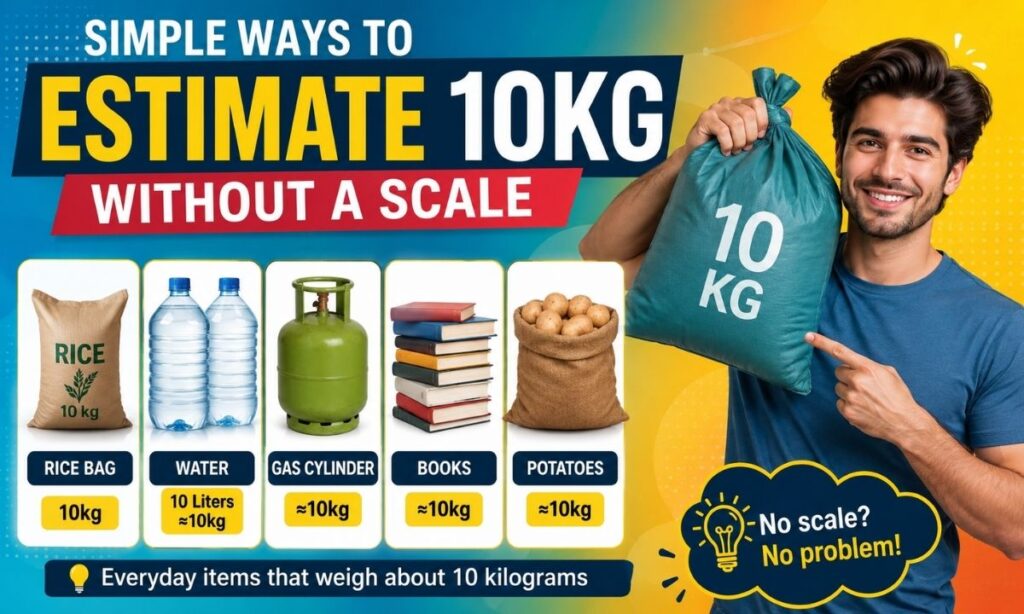
Not everyone has a kitchen scale sitting around, and that’s completely fine. Your body can actually do a decent job of estimating 10kg once you know a few tricks.
Try holding two full 2 liter soda bottles in each hand. That combined weight sits close to 10kg and gives you an instant feel for it. You can also compare it to a full grocery bag packed tight with canned goods.
Another easy trick is picking up a car battery. Most standard batteries land right around this weight range, making them a handy comparison point if you’re working in a garage.
Why Knowing 10kg Actually Matters
This isn’t just a random trivia question. Knowing what 10 kilograms feels like helps you make smarter decisions every single day, whether you realize it or not.
Packing for a flight becomes way less stressful once you can estimate weight by feel instead of guessing and hoping. You’ll avoid those annoying overweight baggage fees that catch so many travelers off guard at the counter.
It also helps at the gym. Picking the right dumbbell weight without overloading yourself protects you from injury and helps you build strength safely over time.
Frequently Asked Questions About Things That Weigh 10Kg
How much is 10kg in pounds?
10kg equals about 22 pounds. Round numbers make it easy to remember on the go.
What household item weighs exactly 10kg?
A full bag of dog food or two gallons of paint are both solid everyday examples that hit close to the mark.
Is a 10kg dumbbell heavy for beginners?
It can be, depending on the exercise. Many beginners start lighter and build up to 10kg over a few weeks of training.
What weighs close to 10kg that I can find at home right now?
A stuffed suitcase, a 24 pack of soda, or a stack of four bricks are all solid comparisons most people already have nearby.
Why do airlines use 10kg as a common carry on limit?
It keeps luggage manageable for overhead bins while still giving travelers enough room to pack the basics for short trips.
The Bottom Line
Now you know exactly what 10kg feels like in real life. Whether it’s a French Bulldog, a packed suitcase, or a stack of bricks, these everyday comparisons make the number easy to picture instantly.
Next time you need to lift, pack, or estimate something around this weight, you’ll know exactly what you’re dealing with. No scale needed, no guesswork involved.
Got a favorite way to picture 10kg that we missed? Drop it in the comments below and share this guide with a friend who’s currently stressing over their suitcase weight.