
Ever tried to picture 100 feet in your head?
It sounds easy.
But most people guess way off.
Here is the quick answer.
100 feet equals about 30 meters.
It equals about 33 yards.
It is roughly seven cars parked bumper to bumper.
It is about one third of a football field.
That is the short version. Now let’s make it stick with real things you see every day.
How Long Is 100 Feet? (The Quick Reference)
Let’s get the numbers out of the way first. You want facts, not guesswork.
| Unit | Measurement |
| Feet | 100 ft |
| Meters | 30.48 m |
| Yards | 33.33 yd |
| Inches | 1,200 in |
| Miles | 0.019 mi |
| Centimeters | 3,048 cm |
These unit conversions matter if you are measuring a yard, a room, or a driveway. Once you know the numbers, the next step is making them real.
The “Rule of Thumb” Estimates
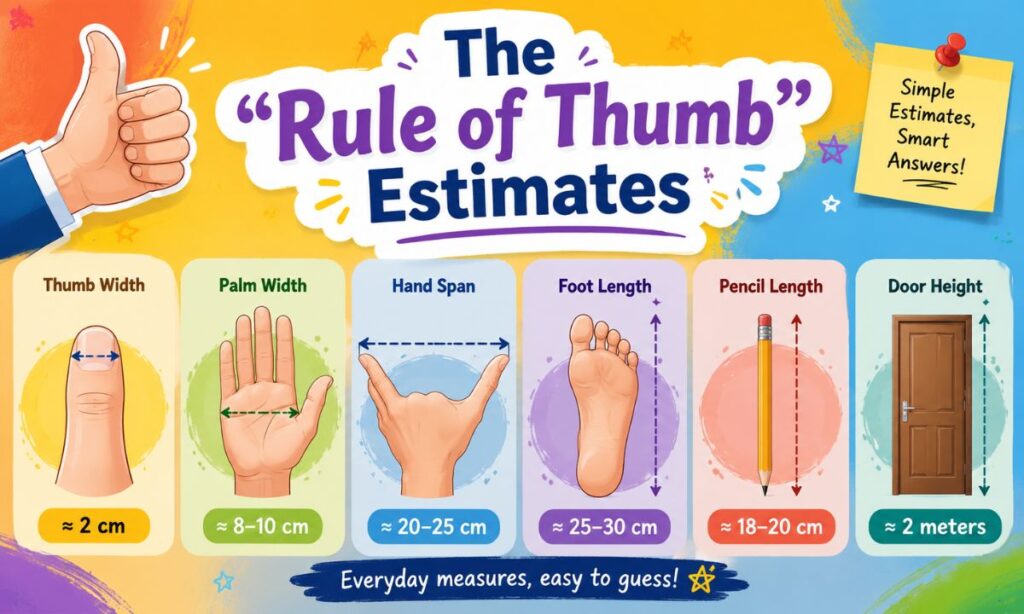
Here is a fast trick. Walking at a normal pace, 100 feet takes about 22 to 25 seconds.
Walking slow and relaxed, it takes closer to 30 seconds.
Think about cars too. Seven sedans parked in a row equal about 100 feet.
And in football terms, it is a third of the field including the end zones.
These rule of thumb estimates are handy when you don’t have a tape measure. Next time you’re waiting on a curb, try counting your steps. You’ll be surprised how close you get.
Why 100 Feet Is Hard to Visualize
Here’s the honest truth. Your brain is not built for raw numbers.
Nobody naturally thinks in feet or meters.
We think in objects. A car. A bus. A swimming pool.
That is why spatial estimation always works better with real world comparisons. Numbers alone are abstract. Objects are something your brain can grab onto.
So instead of memorizing ‘100 feet,’ picture a truck, a tree, or a pool. Your brain will thank you. And you’ll actually remember it next time.
ALSO READ:17 Common Things That Are 18 Inches Long (Real Life Examples)
The Wingspan of a Boeing 727-100
Most people picture smaller planes when they think of wingspans. But the classic Boeing 727-100 nails this comparison almost perfectly. Its wingspan measures about 108 feet tip to tip.
Stand at one wingtip and look across. The other tip sits just past our 100 foot mark. That is a massive stretch of aluminum for one machine.
Pilots and airport engineers deal with these aircraft dimensions daily. Taxiways and hangars are built around these exact numbers. One plane on a tarmac shows you just how big 100 feet really feels.
The 100 Feet Aerial Fire Truck Ladder

Ever seen a fire truck with a huge ladder folded on top? Those are called tiller trucks. Most aerial ladder trucks extend to a maximum of about 100 feet.
That number is not random. It is built to reach the roof of a ten story building. Firefighters train for years to judge this distance correctly.
One wrong angle and the ladder misses a power line or a window. That is why this measurement is treated like a life or death science. Next time you see one fully extended, you’re looking at exactly 100 feet in action.
One-Third of an American Football Field
Football fans already have a built in ruler. A full field runs about 300 feet long. That means 100 feet lands you just past the 33 yard line.
Picture the goal line. Now imagine a receiver sprinting past the 33. That gap is almost exactly our target distance.
This works so well because we have all watched games. We already know what that stretch of grass looks like. It turns an abstract number into something you have seen a hundred times on TV.
The Width of an 8-Lane Highway
Length is not the only way to picture distance. Width works just as well. A standard highway lane is 12 feet wide in most of the United States.
Multiply that by eight lanes. You get 96 feet, just shy of our 100 foot goal. Add the shoulder space and you’re basically there.
Next time you cross a bridge over a busy highway, look down. Those eight lanes packed together are a near perfect snapshot of 100 feet lying flat. It is one of the easiest comparisons to spot in daily life.
The Eastern Cottonwood Tree
Nature has its own version of a measuring stick. The Eastern Cottonwood tree grows fast along rivers and wet ground in North America. A healthy, mature cottonwood reaches close to 100 feet tall.
These trees are surprisingly consistent in height. Foresters use them as a rough natural benchmark. Looking straight up at one gives you a real sense of vertical scale.
It is not a perfect ruler, since nature does not measure exactly. But it is close enough to count. Few trees in North America climb this high this reliably.
The Blue Whale
You cannot talk about 100 feet without mentioning the biggest animal alive. A mature blue whale can stretch close to 98 to 100 feet long. That is longer than most swimming pools.
Its heart alone is roughly the size of a small car. Its tongue can weigh as much as a small elephant. These numbers sound made up, but they are real.
Line up two semi trailers end to end and you get close to one whale. That is how massive this creature actually is. It makes an Olympic pool look small by comparison.
The Hollywood Sign
The famous Hollywood Sign sits on Mount Lee overlooking Los Angeles. Each letter stands about 45 feet tall. Stack two letters on top of each other and you’re near 90 feet.
Add the base and support structure. You land close to our 100 foot target. Tourists snapping photos rarely realize how tall this landmark actually is.
It is one of the most photographed structures in the world. Yet almost nobody guesses its true height correctly. That is exactly why it makes a great comparison here.
Two Semi-Trucks and Full Trailers

Highways move on semi trucks and trailers every single day. A standard trailer alone runs about 53 feet long. Add the cab and a single rig stretches past 70 feet.
But look at just the trailers. Park two of them end to end. You get roughly 106 feet, a close match to our target.
Builders and real estate folks use this trick often. Picture two trucks parked along a property line. That instantly tells you roughly how much frontage you’re working with.
The 10-Story Building
Architects use a simple shortcut. Each floor in a commercial building eats up about 10 feet of height. That includes space for wiring, pipes, and ceiling gaps.
So a 10 story building lands almost exactly on 100 feet. Whether it’s an apartment complex or a small office tower, the math holds up. Look at the roof of the tenth floor and you’re staring at our target distance straight up.
This is one of the most reliable comparisons on this list. Cities are full of these buildings. You probably pass one without noticing every single day.
The NBA Basketball Court
An official NBA court measures 94 feet from baseline to baseline. That’s close, but not quite 100. Add the out of bounds safety space behind each hoop and you get there fast.
Most gyms give a few extra feet of clearance on both ends. Wall to wall, you’re basically looking at 100 feet. Anyone who has sat courtside has already seen this distance in person.
It is one of the most familiar sports comparisons around. Millions of fans already know this space by heart. That familiarity makes it an easy mental shortcut.
A Standard Bowling Lane
A bowling lane looks shorter than it actually is. The playing surface from the foul line to the pins runs about 60 feet. That is the part players actually see.
But the full structure includes more. Add the approach area where bowlers walk. Add the pit where machines reset the pins.
Put it all together and the total length creeps close to 100 feet. It is a classic case of a number being bigger than it looks. Next time you bowl, remember there’s more length behind those pins than you think.
The Olympic Swimming Pool
An Olympic pool measures 50 meters, or about 164 feet. That is longer than our target. So to hit 100 feet, you’d swim just over half the pool.
At a normal community pool, usually around 75 feet long, the math shifts. You’d swim one full length. Then add about a third of the way back.
Swimmers already use lap counts to judge distance without thinking twice. This comparison just gives that habit a real number. It turns pool laps into an easy way to measure length.
Five Standard School Buses
A school bus usually runs 35 to 45 feet long. Line up about two and a half buses and you hit 100 feet. That is shorter than most people guess.
Compare that to sedans, which average around 15 feet each. You’d need roughly seven cars in a row to match the same distance. Either way, the picture becomes clear fast.
Real estate agents actually use this trick. If seven cars fit across a lot, that lot has close to 100 feet of frontage. It is a quick eyeball test used in the field all the time.
10 Kayaks in a Row
Kayaks offer one of the simplest comparisons on this whole list. A standard touring kayak runs about 10 feet long. Line up ten of them end to end and you land right on 100 feet.
Unlike trees or buildings, kayaks come in a pretty uniform size. That consistency makes the math almost too easy. Campers and paddlers already have a built in measuring tool without even trying.
Next time you’re at a lake, count the kayaks on the shore. Ten in a row is basically a ruler made of plastic and paddles. It is one of the cleanest examples of everyday measurement.
The Base of the Great Sphinx
Ancient builders thought in big numbers too. The Great Sphinx of Giza stretches about 240 feet from paws to tail. Cut that length in half and you get around 120 feet.
That’s just over our target distance. It shows that even thousands of years ago, humans built on a massive scale. Modern trucks and sedans look tiny next to structures like this.
Standing near the Sphinx, most visitors underestimate its true size. Photos flatten distance and hide scale. In person, the length hits differently.
40 Human Paces
Sometimes you don’t have a truck, a tree, or a pool nearby. All you need is your own two feet. The average adult stride covers about 2.5 feet per step.
To estimate 100 feet on the ground, try this. Pick a starting point. Walk in a straight line with normal steps.
Count to about 40 paces. This method is called pacing, and city planners use it all the time during quick site visits. No tools needed, just steady steps and a bit of practice.
The 100 Feet Challenge: Can You Beat It?
Ready to test your own sense of distance? Let’s turn this into a quick game.
Here’s how it works.
● Pick a space like a yard, a park, or a long hallway.
● Grab a few movable objects like shoes, water bottles, or books.
● Guess where 100 feet would end without measuring anything.
● Line up your objects to mark your guess, then measure it and see how close you landed.
Want to level it up?
● Time Trial: See how fast you can walk the distance.
● Friend vs Friend: Have a friend guess the mark, then measure together.
This little game does something numbers alone never could. It trains your eye to actually see distance in real space. Try it once and you’ll start noticing 100 foot stretches everywhere you go.
FAQs About 100 Feet
How many subway cars make up 100 feet?
A standard subway car runs about 50 to 60 feet long, so two cars end to end land close to 100 feet.
Can a wind turbine blade reach 100 feet?
Yes, many smaller turbine blades measure close to 100 feet, similar to the height of a ten story building.
How far is 100 feet in a swimming pool relay?
In a 25 yard pool, 100 feet is almost one full length plus a short turn, making it a solid sprint distance.
How long is 100 feet on a train station platform?
A short commuter platform can run close to 100 feet, enough space for two or three train cars to line up.
Is 100 feet enough for a zipline?
Yes, plenty of beginner ziplines run between 100 and 150 feet, long enough for a fun ride without feeling too intense.
Conclusion
So there you have it. 100 feet is not just a number sitting on a page.
It is a whale gliding through water. It is a fire truck ladder reaching toward a rooftop. It is ten kayaks resting on a lake shore.
Once you connect a number to something real, it sticks. Next time someone mentions 100 feet, you won’t just nod along. You’ll actually picture it, whether that’s a school bus, a football field, or forty steps across your backyard.
Distance stops being abstract the moment you tie it to something you already know. And now, thanks to these 16 comparisons, 100 feet has a permanent place in your everyday thinking.