
Ever asked yourself what time was it 12 hours ago? It happens more than you think. Maybe you are checking a work log, or maybe you just woke up confused after a long nap. This simple question has a simple answer once you know how to count backward on the clock.
Figuring out what time was it 12 hours ago is easy math, no fancy tools needed. Just take the current time and flip AM to PM, or PM to AM. That’s it. The hour number stays exactly the same, only the half of the day changes.
This tool helps you get the answer fast, without doing the math yourself. Whether you’re tracking flight times, work shifts, or just curious, our calculator shows what time was it 12 hours ago in one click. No guesswork, no confusion, just a quick clear result.
The Quick Answer for What Time Was It 12 Hours Ago
Time subtraction sounds fancy, but it’s just moving the clock hands backward by half a day.
The hour and minutes never change. Only the AM or PM label flips.
So if it’s 4:15 PM right now, 12 hours ago it was 4:15 AM.
If it’s 4:15 AM right now, 12 hours ago it was 4:15 PM yesterday.
That single word, yesterday, is the part people forget, and it’s the part that trips up timestamp calculations the most.
Why AM and PM Switch Every 12 Hours
Think of a full day as a circle cut exactly in half.
One half is morning through noon, the other half is afternoon through midnight.
Twelve hours is precisely one half of that circle, so moving backward that far always lands you on the opposite half.
Noon flips to midnight. Midnight flips to noon. Every other hour just swings from morning to night or night to morning.
This is called a half day cycle, and once you picture it as a circle instead of a straight line, it clicks fast.
What Happens When You Cross Midnight
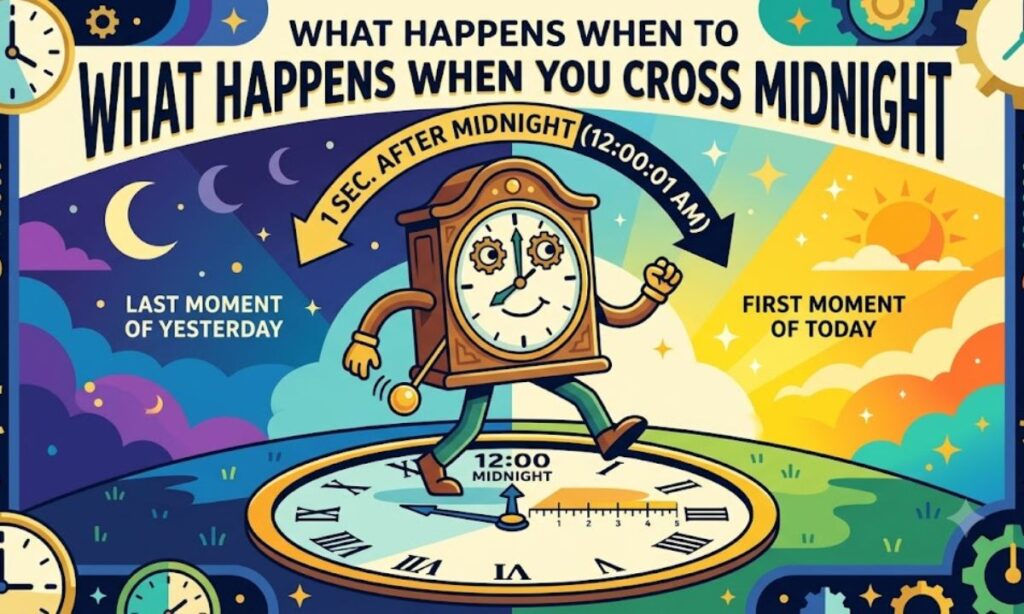
Midnight is where most people mess up their math, and honestly, it trips up even careful planners.
If the current time is anywhere between 12:00 AM and 11:59 AM, subtracting 12 hours pushes you into yesterday.
For example, 3:20 AM today became 3:20 PM yesterday.
There’s also a real world twist worth knowing about, called daylight saving time.
Twice a year, clocks in many countries jump forward or back by an hour, which means a plain 12 hour subtraction can be off by 60 minutes on those specific days.
If you’re calculating shift times or flight schedules near a DST changeover, double check with a live world clock instead of doing it by hand.
Common Mistakes People Make When Subtracting 12 Hours
Most errors here aren’t about math skill, they’re about rushing.
People forget the date changes, they mix up noon and midnight, or they accidentally adjust the minutes too.
Let’s break down two of the sneakiest ones.
Changing the Minutes
This one happens more than you’d think.
Someone sees 6:34 PM and rounds it in their head at 6 o’clock, then answers 6:00 AM instead of 6:34 AM.
The fix is simple: the minutes never move, ever.
Only the hour label and the AM or PM tag change during a 12 hour shift, so if you’re touching the minutes, stop and recheck.
Ignoring Time Zones
If a friend in another country tells you that happened 12 hours ago, their 12 hours ago and your 12 hours ago might be two completely different moments.
Time zone differences stack on top of the basic subtraction, they don’t replace it.
So first do the simple 12 hour flip in their local time, then convert that result into your own time zone.
Skipping this step is why international teams often show up to calls at the wrong hour.
Real Life Situations Where Knowing 12 Hours Ago Matters
This isn’t just a trivia question, it shows up constantly in daily life.
Nurses and factory workers on 12 hour shifts use this exact math every single day to figure out when their shift started.
Security teams reviewing camera footage often need to jump back exactly 12 hours to catch the start of an incident.
Parents tracking a baby’s medicine schedule, delivery drivers checking timestamps, and gamers syncing up for a global event launch all lean on this same calculation.
Even something as small as reading a text message that says sent 12 hours ago depends on this simple flip.
Once you notice it, you’ll see this pattern everywhere.
A Simple Formula to Remember
If you forget everything else in this article, remember this one line.
Current time minus 12 hours equals your answer.
Here’s the mental checklist that makes it foolproof:
• Keep the hour exactly the same
• Keep the minutes exactly the same
• Flip AM to PM, or PM to AM
• Check if you crossed midnight, and if you did, move the date back one day
Run through those four steps every time and you genuinely cannot get it wrong.
Examples Using Everyday Times
Sometimes seeing it laid out is faster than reading about it.
Here’s a quick reference table you can bookmark.
| Current Time | 12 Hours Ago |
| 7:15 AM | 7:15 PM (yesterday) |
| 8:40 PM | 8:40 AM |
| 10:05 PM | 10:05 AM |
| 5:50 AM | 5:50 PM (yesterday) |
| 1:45 PM | 1:45 AM |
| 12:00 PM (noon) | 12:00 AM (midnight) |
| 12:00 AM (midnight) | 12:00 PM (yesterday, noon) |
Notice the pattern again: same hour, same minutes, flipped label, and a date change whenever midnight gets crossed.
What About Seconds and Milliseconds
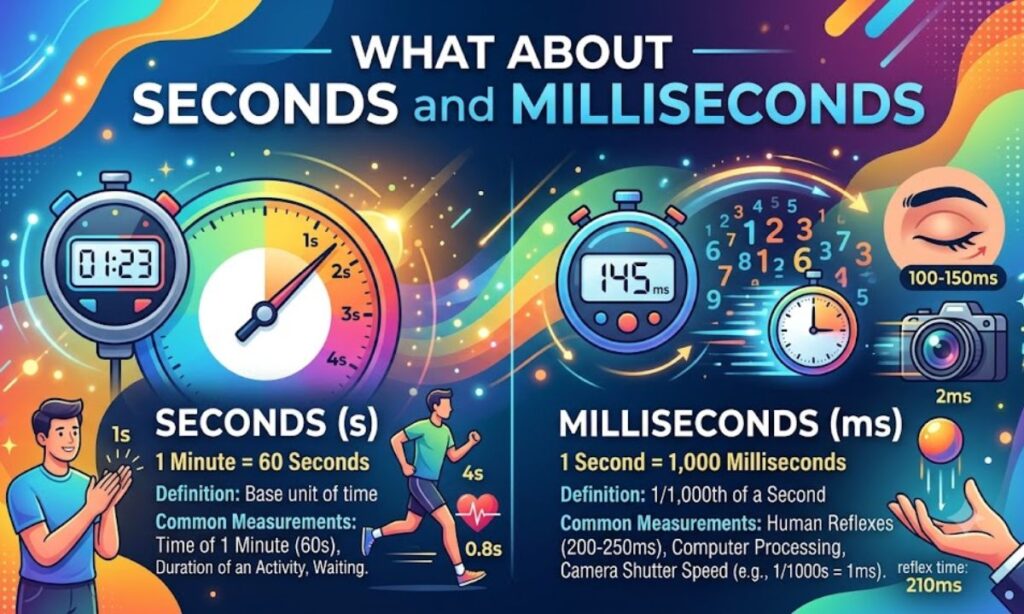
Humans think in hours, but computers think in much smaller pieces.
For anyone working with code, spreadsheets, or scheduling tools, here’s how 12 hours breaks down.
• 12 hours equals 720 minutes
• 720 minutes equals 43,200 seconds
• 43,200 seconds equals 43,200,000 milliseconds
Systems like server logs, banking transactions, and app notifications usually store time down to the millisecond for accuracy.
That’s also why programming languages calculate time as pure numbers instead of AM and PM labels, it avoids confusion entirely.
Why Time Feels Different Than It Really Is
Twelve hours on a clock is always exactly twelve hours, no exceptions.
But your brain doesn’t experience it that way at all.
A kid waiting for a birthday party feels those hours crawl by painfully slow.
Someone catching up with old friends can look up and realize the entire afternoon vanished without noticing.
Psychologists say emotion, attention, and memory all bend our sense of time, even though the clock itself never changes speed.
So the next time twelve hours feels longer or shorter than it should, that’s just your brain doing its own thing, not the math being wrong.
10 Common Things People Get Wrong or Wonder About
Quick fire round, here are the most common sticking points people run into.
1. Forgetting that crossing midnight changes the date
2. Mixing up 12:00 AM (midnight) with 12:00 PM (noon)
3. Accidentally changing the minutes instead of leaving them alone
4. Ignoring time zone differences in group chats or calls
5. Not accounting for daylight saving time near the switch dates
6. Assuming an online time calculator and manual math will always match exactly
7. Confusing 12 hours ago with half a day ago in casual conversation, when they’re actually the same thing
8. Forgetting that noon and midnight are exactly 12 hours apart
9. Overcomplicating a simple flip by trying to count hours one by one
10. Not double checking shift start times against a written schedule
Most of these come down to rushing, so slowing down for five seconds solves nearly all of them.
Tips to Calculate Time Faster
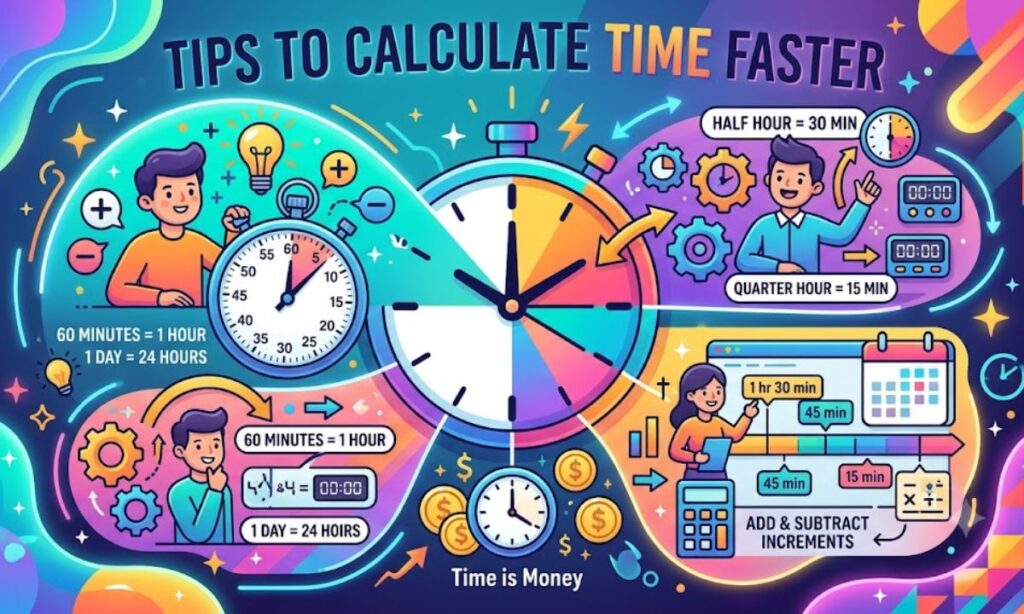
A little practice turns this into a five second mental task.
• Memorize that 12 hours always equals 720 minutes
• Picture the day as a circle split into two halves, not a straight line
• Always ask yourself did I cross midnight before finalizing your answer
• Keep a mental anchor for noon equals 12:00 PM and midnight equals 12:00 AM
• Use a trusted time difference calculator when the stakes are high, like flights or medication
Once these habits stick, you won’t reach for a calculator at all.
Expert Advice
People who work in scheduling, healthcare, or aviation rely on the 24 hour clock specifically to avoid AM and PM confusion.
If your job involves shift work or cross country coordination, it’s worth switching your phone or work software to 24 hour time.
It removes the guesswork completely, since you’re just subtracting 12 from the hour number.
For anything tied to money, medicine, or legal timestamps, always confirm with an official world clock tool rather than trusting mental math alone, since a single missed hour can cause real problems.
Frequently Asked Questions
Is 12 hours ago always the same hour and minute?
Yes, only the AM or PM label changes, and sometimes the date shifts too.
Does subtracting 12 hours always mean it was yesterday?
No, it only becomes yesterday if the current time falls between midnight and 11:59 AM.
Is noon exactly 12 hours after midnight?
Yes, they’re exact opposites on the clock, precisely half a day apart.
Should I trust an online calculator over doing it myself?
For anything important like flights, medication, or contracts, yes, always double check with a reliable tool.
Does daylight saving time affect this calculation?
Yes, on the specific days clocks change, a plain 12 hour subtraction can be off by an hour, so check a live clock during those transitions.
Final Thoughts
Figuring out what time it was 12 hours ago really comes down to one move: keep the hour and minutes, flip AM to PM, and watch for midnight.
Once that clicks, you’ll never hesitate over this question again, whether you’re checking a work shift, reviewing footage, or just settling a text message debate with a friend.
Got your own trick for working this out fast? Drop it in the comments, the simplest shortcuts are usually the ones everyone ends up using.