
18 inches equals 1.5 feet.
That is the quick answer if you are in a rush.
It is also the same as 45.72 centimeters or half a yard.
But numbers alone do not help much.
Your brain needs a picture, not a formula.
That is exactly what this guide gives you.
Maybe you are ordering a storage bin online and guessing if it will fit.
Maybe you are building a shelf and worried about shelf depth.
Or maybe you just got curious after seeing 18 inches on a product page.
Whatever brought you here, you are covered.
We will use everyday objects you already know.
By the end, 18 inches will feel as familiar as a foot ruler.
How Long Is 18 Inches, Really?
18 inches sits right between a ruler and a yardstick.
It is bigger than 12 inches but smaller than 24 inches.
Think of it as the in between size that shows up more than you expect.
It shows up in furniture dimensions, home improvement plans, and even shipping boxes.
Bakers use it, DIY folks use it, and so do interior designers.
It is one of those everyday measurements that quietly runs your whole house.
Once you lock this size into memory, guessing games stop.
No more standing in a store aisle squinting at a tape measure.
You will just know.
Why Visualizing 18 Inches Is So Useful
Numbers on a screen do not tell you if something fits in your car trunk.
A picture in your head does.
That is the real power of visualizing measurements.
Skipping this step is how people end up with a couch that will not fit through the door.
Or a storage bin that is two inches too tall for the shelf.
Small mistakes, but annoying ones.
Benefits of Understanding This Measurement
Knowing this size saves you money on returns.
It also saves you the headache of measuring twice and still guessing wrong.
Good spatial awareness just makes daily life smoother.
You start shopping online with more confidence.
You stop over ordering or under ordering shelf organizers.
It even helps with DIY projects where one wrong cut wastes good wood.
Common Misconception
Most people assume 18 inches is basically 2 feet.
It is not.
That missing six inches trips up a lot of shopping decisions.
This mix up happens most with furniture dimensions and online shopping carts.
People eyeball it and assume close enough.
In tight spaces, close enough does not cut it.
also read:How Long Is 7 Inches? 16 Common Things That Are 7 Inches Long
12 Common Things That Are About 18 Inches Long
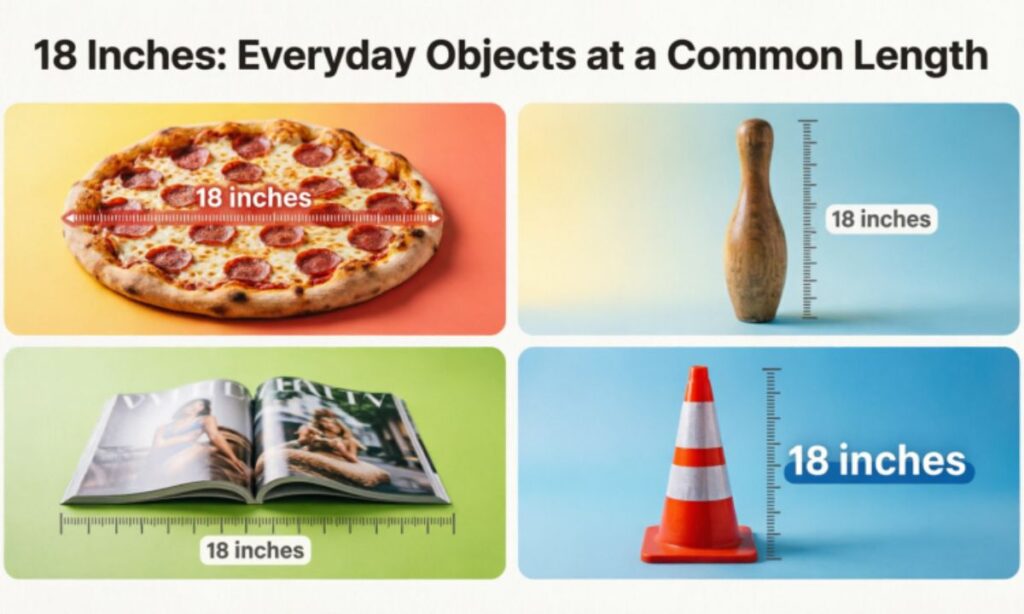
Here is the fun part.
Real objects you already touch, see, or use.
These will stick in your memory way better than plain numbers.
1. A Standard Carry-On Backpack Height
Most carry-on backpacks sit close to 18 inches tall.
If yours fits comfy on your back without dragging low, that is your reference point.
Airlines actually build size charts around numbers like this.
Next time you pack for a trip, glance at your bag.
That height is basically your new mental ruler.
Simple, right?
2. Two Standard Rulers Placed End to End (Minus a Little)
A regular ruler is 12 inches.
Picture one full ruler plus half of a second one.
That combo lands you almost exactly at 18 inches.
This trick works because rulers are something almost everyone owns.
No fancy tools needed, just basic school memory.
Quick, easy, and pretty accurate.
3. A Medium-Sized Throw Pillow (One Side)
Plenty of throw pillows measure 18 by 18 inches.
If you have ever hugged one on the couch during movie night, you already know this size.
It is one of the most reliable home comparisons out there.
Pillows are everywhere, from bedrooms to living rooms.
That makes this comparison one of the easiest to remember.
Next time you fluff one up, notice the size.
4. A Large Kitchen Cutting Board
Big cutting boards used for meal prep often run 16 to 18 inches long.
Picture the board you use for chopping veggies or slicing chicken.
That surface length matches our measurement closely.
Cooks deal with this size daily without even thinking about it.
It is a hands on, kitchen tested comparison.
Great for anyone who spends time near a stove.
5. The Length of a Skateboard Deck (Short Boards)
Compact skateboard decks, especially youth sizes, land close to 18 inches.
Skaters measure decks constantly when picking gear.
This gives sports fans an easy mental image.
If you or your kid has ever shopped for a board, this rings true.
Deck length actually matters for tricks and balance.
So this comparison is not just random trivia.
6. A Cheese Grater (Full Length Box Style)
Standard box style cheese graters often measure close to 18 inches tall.
Anyone who grates cheddar for taco night has held one.
It is a kitchen tool most homes already own.
This one might surprise you, but it works.
Next grating session, take a quick look.
You will likely land close to our target size.
7. A Medium Laptop Sleeve or Case
Laptop sleeves built for bigger laptops often run around 18 inches with padding included.
If your laptop slides in with a snug fit, that case length is your reference.
Tech lovers deal with this size constantly.
Work from home folks especially notice this one.
Sleeves protect gear, and sizing matters for a good fit.
Another everyday example hiding in plain sight.
8. A Typical Cat from Nose to Tail Base
An average adult house cat, measured from nose to where the tail starts, often lands near 18 inches.
Cat owners have probably noticed this without realizing the exact number.
It is a fun, memorable comparison for pet lovers.
Sizes vary a bit by breed, so treat this as a general guide.
Still, it works surprisingly well as a mental picture.
Purely for size comparison here, nothing scientific.
9. A Shelf Depth in Many Cabinets
Plenty of kitchen cabinets and bookshelves use 18 inches as standard shelf depth.
This detail matters a lot when planning storage or buying organizers.
Furniture makers rely on this size constantly.
If you are renovating or organizing a closet, this number becomes important fast.
Getting shelf depth wrong means wasted space or items that stick out awkwardly.
Good to know before you buy bins or baskets.
10. A Rolling Pin (Classic Size)
Traditional wooden rolling pins often measure close to 18 inches end to end.
Bakers handle this size regularly without thinking twice.
It is a comforting, kitchen tested comparison.
If you bake bread or pie crust often, you already know this feel in your hands.
Rolling pins come in different sizes, but the classic style lands right here.
A solid, reliable reference point.
11. The Width of a Small Coffee Table
Some compact coffee tables or side tables measure close to 18 inches wide.
This helps a ton when planning furniture spacing in small living rooms.
Especially useful for apartments or tight spaces.
If you are shopping for a small space, this comparison saves guesswork.
Furniture shopping online gets way easier once you have a solid mental size.
No more measuring tape emergencies at the store.
12. A Large Monitor’s Width (Including Frame)
Many computer monitors, especially widescreen styles, measure close to 18 inches wide including the frame.
Desk setups and workspace planning both benefit from knowing this.
Remote workers deal with this size constantly.
If your monitor takes up a good chunk of desk space, this is likely why.
Useful for anyone rearranging a home office.
Small detail, big impact on desk layout.
How to Measure 18 Inches Without a Measuring Tool
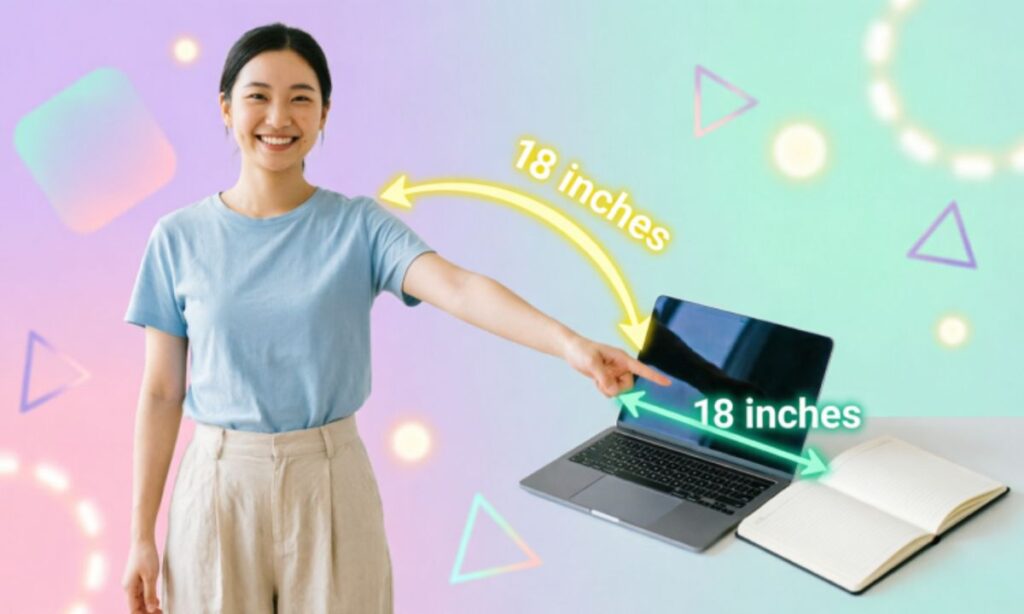
Sometimes a tape measure is nowhere in sight.
Estimation skills save the day here.
These tricks are simple and surprisingly close to accurate.
Simple Estimation Techniques
● Use your forearm from elbow to wrist, then add a few inches.
● Stack three adult hands side by side for a rough estimate.
● Combine a foot long object with half of another.
● Compare against known items like pillows or backpacks.
Both tricks work in a pinch when tools are missing.
None of these are perfect, but they work for everyday decisions.
Common Mistakes People Make With 18 Inches
Even simple sizes trip people up more than expected.
Here are the slip ups worth avoiding.
Small awareness here prevents bigger headaches later.
Mistake 1: Confusing Inches with Feet
18 inches is not close to 18 feet, and it is not quite 2 feet either.
This mix up causes real shopping and planning errors.
Always double check which unit you are working with.
It sounds obvious, but tired brains make this mistake often.
A quick glance at the label saves a return trip to the store.
Better safe than sorry here.
Mistake 2: Ignoring Depth vs Length
People often measure height when they actually need depth or width.
This mix up wrecks furniture and shelving plans fast.
Always clarify which direction you are measuring.
Cabinets, shelves, and storage bins all depend on this detail.
One wrong direction and your item simply will not fit.
Slow down and check twice before buying.
Mistake 3: Assuming About Means Exact
Many objects are approximately 18 inches, not precisely 18 inches.
That small gap matters when precision counts.
Always build in a little wiggle room for tight spaces.
This mistake shows up most with furniture and DIY builds.
A half inch off can mean a project that does not quite work.
Measure twice, cut once, as the old saying goes.
When 18 Inches Is a Critical Measurement
This size shows up more often than most people realize.
Getting it right actually matters in several real situations.
Here is where precision pays off.
Common Use Cases
● Cabinet and shelf depth planning
● Furniture spacing in tight living rooms
● Electronics setups and desk layouts
● Storage bins and pet crates
● DIY woodworking projects
● Packaging and shipping dimensions
Knowing this size upfront saves real time and real money.
18 Inches Compared to Other Common Measurements
Comparison makes any size easier to remember.
18 inches is bigger than a 12 inch ruler.
It is smaller than 24 inches, which equals 2 feet exactly.
It sits at roughly half a yard, a handy mental shortcut.
It is slightly longer than most laptop widths.
And it is shorter than most coffee tables and side tables.
These side by side comparisons lock the size into memory fast.
Once you see it next to familiar objects, guessing stops.
That is really the whole goal here.
Frequently Asked Questions About 18 Inches
Is 18 inches considered big or small?
It depends on the object.
For small items, 18 inches feels large.
For furniture or room planning, it feels fairly compact.
Is 18 inches the same as 1.5 feet?
Yes, exactly 1.5 feet.
No rounding needed here.
Simple math, simple answer.
How can I quickly visualize 18 inches?
Picture a throw pillow, a backpack height, or a cutting board.
All three give a strong, reliable mental image.
Pick whichever one you see most in your daily life.
Is 18 inches commonly used in furniture?
Very much so.
Shelf depth, side tables, and storage units all lean on this size often.
Furniture makers treat it as a practical standard.
Can I estimate 18 inches with my body?
Yes, your forearm plus a hand span gets you very close.
No tools needed for a rough guess.
Handy trick worth remembering.
Why do so many products use 18 inches?
It hits a sweet spot.
Big enough to be useful, small enough to fit most spaces.
That balance is exactly why it shows up everywhere.
Final Thoughts
Measurements only click once you can picture them.
Once 18 inches means a pillow, a backpack, or a rolling pin in your mind, the number stops feeling abstract.
It becomes something real you can use right away.
Next time you spot 18 inches on a product page or a project plan, you will not need to guess.
You will already have a clear picture in your head.
And that little bit of confidence makes shopping, building, and planning a whole lot easier.