
You grab a bolt labeled M6 and wonder if it’s really that small.
You hold a bead for a bracelet and think, is this too big or too tiny?
That’s the thing about 6mm size — your eyes just can’t guess it right without help.
This guide clears it up fast.
No ruler, no guesswork, just real 6mm objects you already know.
By the end, you’ll spot 6mm anywhere without blinking twice.
6mm at a Glance
Here’s the quick answer before anything else.
6mm equals 0.236 inches, or about a quarter inch minus a hair.
In centimeters, that’s 0.6cm, and in meters it’s a tiny 0.006m.
Picture the white tip of your pinky nail.
Now stretch that a touch wider.
That little stretch is basically 6 millimeters in real life.
This size shows up more than people realize.
Jewelry, tools, tubing, machine parts, they all lean on this exact measurement.
Once you lock in this reference, everything else on this page clicks fast.
Conversion Table
| Unit | Value |
| Millimeters | 6 mm |
| Centimeters | 0.6 cm |
| Inches | 0.236 in |
| Meters | 0.006 m |
Numbers are easy to forget, so keep this table handy.
Whether you’re shopping online or double checking a part, this saves a trip back to Google.
Bookmark it if you deal with millimeter to inch conversion often.
See 6mm Instantly Without Tools
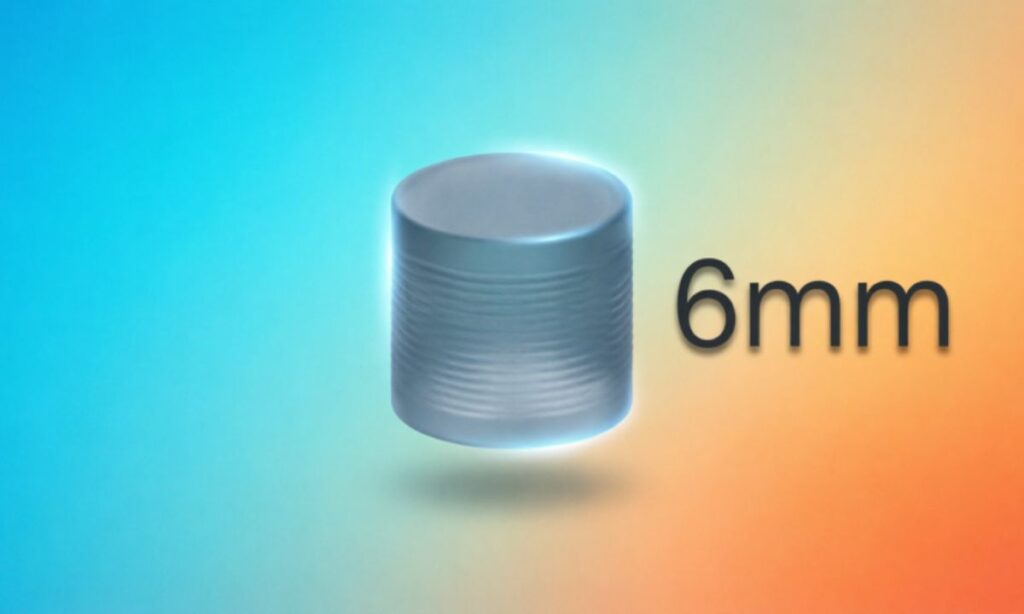
No ruler nearby? No problem at all.
Look at your pinky nail, right at the white tip.
Now imagine a small stretch past that edge, that stretch is your 6mm reference.
Try this too.
Pinch your thumb and index finger together, then open a tiny gap.
Make it just a touch wider than your nail tip, and you’re staring straight at 6mm.
This trick works anywhere, anytime.
No app, no tape measure, no waiting.
Just your own hand doing the measuring for you.
also read:How Big Is 3mm? 12 Common Things That Are 3mm Size
11 Real Objects That Are Exactly 6mm
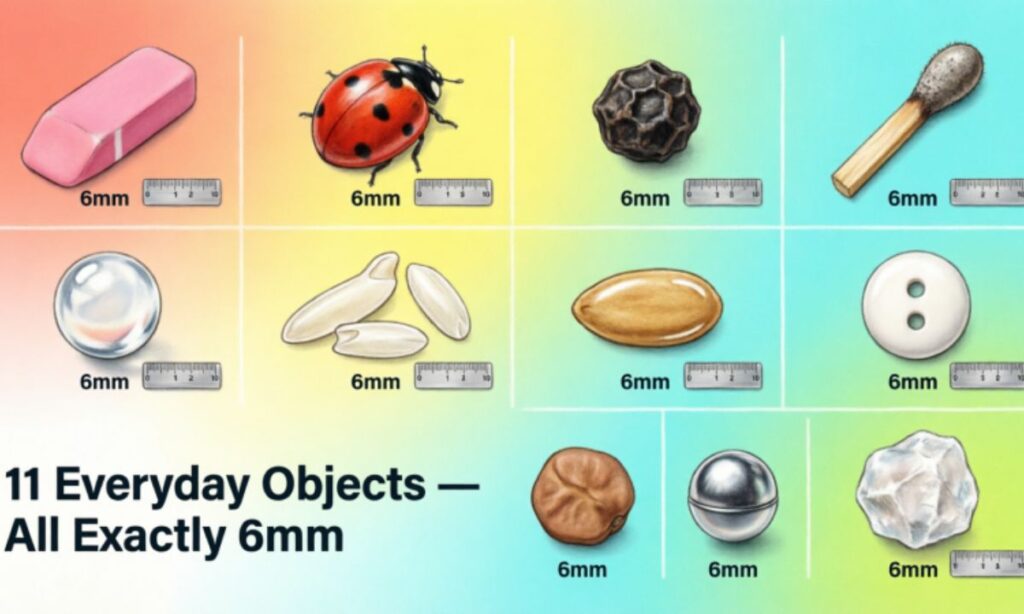
These aren’t random guesses pulled from nowhere.
Every single item below is tied to a real manufacturing standard or industry spec.
That means what you’re picturing is exactly what you’d hold in your hand.
Some of these you’ve touched a hundred times without noticing the size.
Others you’ll recognize the second you read the name.
Either way, this list makes 6mm objects stick in your memory for good.
1. M6 Nut
An M6 nut is built to grip a bolt with a 6mm thread.
This isn’t a rough estimate, it’s an actual ISO metric standard used in factories worldwide.
Pick one up and you’ll feel a small, dense ring of metal with real weight to it.
You’ll spot these in furniture kits, fences, and anything bolted together at home.
The hex shape makes it grippy for wrenches, even in tight spots.
Mechanics and DIY folks reach for M6 hardware constantly because it hits a sweet spot between strong and compact.
Next time you’re assembling a shelf, check the bag of hardware.
There’s a good chance an M6 nut is sitting right there.
That’s your 6mm reference, free of charge.
2. 6mm Glass Bead
Glass beads come in exact sizes, and 6mm sits right in the popular range.
Crafters and jewelry makers reach for this size constantly because it’s easy to string and still looks nice.
Roll one between your fingers and it feels smooth, round, and just a bit weighty for its size.
You’ll see these strung into bracelets, rosaries, and homemade necklaces.
They’re big enough to catch the light but small enough to not look bulky.
This makes them a favorite for anyone building jewelry at home.
If you’ve ever browsed a craft store bead wall, you’ve seen dozens of these.
They’re labeled clearly, so grabbing a 6mm bead confirms the size instantly.
It’s one of the easiest ways to picture this measurement in real life.
3. 6mm Aquarium Air Tube
Fish tank owners know this tube well.
It connects air pumps to filters and bubblers, keeping the whole tank breathing properly.
The outer diameter sits at 6mm, a standard size across most pet store brands.
Hold a piece and it feels light, flexible, and slightly soft to the touch.
It bends easily around tank corners without kinking or cutting off airflow.
This flexibility is exactly why the size was standardized in the first place.
If you’ve ever set up a tank, you’ve handled this tubing.
It’s a quiet little example of 6mm size doing important work behind the scenes.
Most people never think twice about it until they need a replacement.
4. 6mm Steel Rod
Steel rods get cut to precise diameters, and 6mm is a common one in construction and fabrication.
These rods reinforce concrete, frame small structures, and get welded into custom builds.
Pick one up and you’ll notice it feels solid, heavy, and clearly stronger than a wire.
Compared to thinner rods, this size holds up under pressure without adding too much bulk.
Builders like it because it’s strong enough for support work but still easy to cut and shape.
That balance is exactly why 6mm shows up so often on job sites.
If you’ve walked past a construction site, you’ve probably seen bundles of these rods.
They’re stacked, tied, and ready for reinforcement work.
That’s your 6mm steel reference, right out in the open.
5. 6mm Acrylic Sheet
Acrylic sheets come in fixed thicknesses, and 6mm is one of the go to options for signage and panels.
This thickness gives enough rigidity to stand upright without extra support.
Run your finger along the edge and you’ll feel a solid, clean line of plastic.
Shops use this thickness for display cases, protective screens, and storefront signs.
It’s thick enough to resist bending but still light enough to install without heavy equipment.
That’s a big reason it’s become an industry favorite.
Next time you see a clear sign outside a shop, check the edge thickness.
There’s a solid chance it’s cut from 6mm acrylic.
It’s a practical, everyday example of this exact size.
6. 6mm Silicone Hose
Silicone hoses are manufactured with precise inner diameters to control fluid and air flow.
A 6mm inner diameter shows up often in automotive systems and lab equipment.
Hold one and it feels soft, stretchy, and smooth, nothing like a rigid plastic tube.
Mechanics use these hoses for small coolant lines and vacuum connections under the hood.
Lab technicians rely on the same size for controlled fluid transfer in testing setups.
The flexibility means it can twist and turn without cracking, which matters a lot in tight engine bays.
If you’ve ever popped open a car hood, you’ve probably seen tubing like this.
It’s thin, bendy, and easy to miss.
But it’s a perfect physical example of 6mm doing quiet, essential work.
7. 6mm End Mill Cutter
This is precision tooling used in CNC machining.
A 6mm cutting diameter is a standard size for shaping metal, wood, and plastic parts.
Looking at the tip, you’ll see a sharp, compact cylinder built to spin fast and cut clean.
Machinists reach for this size constantly because it balances speed with detail work.
It’s small enough for intricate cuts but sturdy enough to handle repeated use.
Factories running CNC machines keep several of these on hand at all times.
If you’ve ever watched a machining video online, you’ve likely seen a tool this size in action.
It looks tiny compared to the machine around it.
But that small size is exactly what makes fine detail work possible.
8. 6mm Watch Spring Bar
Spring bars are the tiny pins that hold a watch strap onto the case.
Smaller watches, especially women’s styles, often use a 6mm version.
Hold one and it feels delicate, thin, and surprisingly precise for something so small.
Watchmakers rely on exact sizing here because even a small mismatch causes a loose or wobbly strap.
This precision is why watch repair shops keep a full range of spring bar sizes on hand.
A 6mm bar is one of the smaller, more specialized options in that range.
If you’ve ever had a watch strap replaced, this tiny bar did the real work.
It’s easy to lose and easy to overlook.
But it’s a clean, exact example of 6mm length in daily life.
9. 6mm Gemstone Setting
Jewelry settings are built to match exact stone sizes, and 6mm is a popular seat diameter.
This means the stone drops in and sits flush, no wobble, no gaps.
Look closely at one and you’ll see a small circular mount shaped perfectly to hold its stone.
You’ll spot this size often in rings, pendants, and stud earrings.
It’s large enough to catch attention but not so big that it feels heavy or overdone.
That balance makes it a favorite among jewelry designers.
If you’ve shopped for a ring with a modest stone, there’s a good chance it was set in a 6mm mount.
It’s a small detail that makes a big visual difference.
This is a genuinely relatable way to picture 6mm diameter.
10. 6mm Curtain Rod Pin
Curtain hardware relies on small pins and supports, and 6mm is a common diameter here.
These pins hold curtain rods steady against the wall bracket.
Hold one and it feels compact, but noticeably sturdy for its size.
Home improvement stores stock these in bulk because curtain setups need reliable, no slip hardware.
A pin this size handles daily curtain movement without loosening over time.
That’s exactly why manufacturers settled on this measurement.
If you’ve ever hung curtains yourself, you’ve handled a piece just like this.
It’s easy to overlook in a hardware bag.
But it’s a genuine, everyday 6mm example sitting right in your home.
11. 6mm Magnet Disc
Mini disc magnets are manufactured in exact sizes, and 6mm is one of the most common.
These little discs pack surprising strength for their size.
Hold one and it feels light, but the pull is strong enough to catch you off guard.
DIY kits, craft projects, and small tool holders all use this size regularly.
It’s compact enough to hide in a project but strong enough to actually hold things in place.
That mix of small size and real strength is why hobbyists love this magnet size.
If you’ve ever built a magnetic craft project, you’ve likely handled one of these discs.
It looks harmless until it snaps onto metal.
That’s 6mm strength hiding in a tiny package.
Visual Size Scale (From Tiny to Visible)
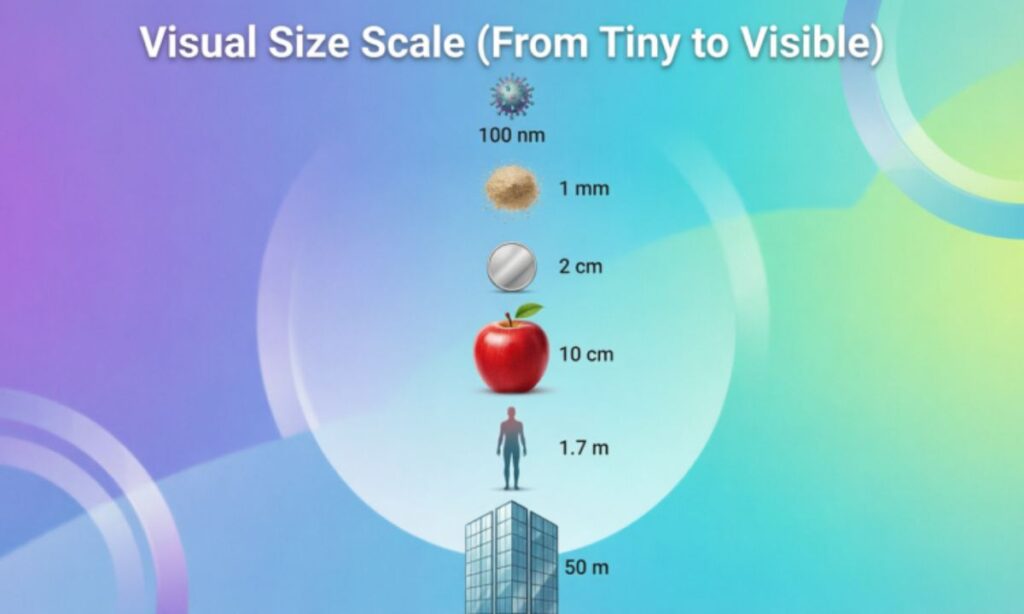
Think of it as a ladder from barely there to clearly noticeable.
● 1mm: barely a dot
● 3mm: a small speck, still tiny
● 5mm: now it’s visible without squinting
● 6mm: a clear, noticeable jump from 5mm
● 10mm: solidly visible, almost a full centimeter
● 25mm: a full inch, no comparison needed
Here’s the easy way to remember the jump.
6mm vs 3mm is double the thickness, plain and simple.
6mm vs 5mm looks close on paper but feels clearly bigger side by side.
6mm vs 10mm is still noticeably smaller, just over half of it.
Here Are More Millimeter Guides For You
Curious about nearby sizes? These guides break them down the same simple way.
● How big is 5mm
● How big is 3mm
● How big is 2mm
Where 6mm Shows Up Without You Noticing
Jewelry leans on this size constantly.
Beads, pearls, and small gemstones at 6mm hit a sweet spot, noticeable but never bulky.
That’s exactly why so many necklaces and bracelets are built around this exact measurement.
Hardware stores are full of it too.
M6 bolts, drill bits, and small tools depend on this size because it’s strong without being heavy.
It’s one of those sizes that engineers landed on because it just works.
Even electronics quietly rely on it.
Small components at 6mm are easier to solder, handle, and install than anything smaller.
That extra sliver of room makes assembly work far less frustrating for anyone building circuits by hand.
How to Measure 6mm Without a Ruler
Method 1: The Fingernail Trick
Your pinky nail’s white tip sits close to 5mm.
Stretch just a touch beyond that edge, and you’ve got a solid 6mm estimate.
It’s fast, free, and always available since your hand goes everywhere with you.
Method 2: Use a Known Object
Grab something you already know is 6mm, like a bead or a bolt.
Set it right next to whatever you’re measuring for an instant side by side comparison.
This beats guessing every single time.
Method 3: Use a Ruler the Right Way
Line up the 0 mark with the 1cm mark.
Move just past the halfway point, which is 5mm, to land on 6mm exactly.
A lot of people stop right at halfway by mistake, so that extra nudge matters.
FAQs
How big is 6mm in inches?
It’s exactly 0.236 inches, just under a quarter inch.
Think tools, beads, and small parts.
What does 6mm look like on skin?
Slightly wider than your pinky nail’s white tip.
Small, but easy to spot once you know the trick.
Is 6mm bigger than a grain of rice?
Yes, most rice grains measure smaller.
Set them side by side and the difference is obvious.
How do I measure 6mm without a ruler?
Use your fingernail trick or grab a known 6mm object like a bead.
Both give you a fast, reliable estimate.
What jewelry size is 6mm?
It’s a standard bead and pearl size.
Common in necklaces, bracelets, and stud earrings.
6mm Quick Reference
| Object | Size | Where to Find |
| 6mm LED | 6mm dia | Electronics store |
| M6 bolt | 6mm dia | Hardware store |
| 6mm pearl | 6mm dia | Jewelry store |
| 6mm bead | 6mm dia | Craft store |
| 6mm drill bit | 6mm dia | Tool shop |
Conclusion
The easiest way to lock in 6mm for good is picturing a bead, an M6 bolt, or a drill bit.
These are real, physical things you can hold, not abstract numbers on a page.
Whether you’re buying jewelry, picking tools, or double checking a part before ordering, this size shows up more than you’d expect.
Bookmark this page so you never have to guess how big is 6mm again.