
How Big Is 2mm?
A 2mm size is about as small as it gets in everyday life, but you have touched it more times than you think.
It equals 0.2 centimeters or roughly 0.078 inches, and it shows up in coins, pencils, jewelry, and even the food in your kitchen.
If you have ever squinted at a measurement on a package and wondered what it actually looks like in real life, this guide is for you.
We are going to compare 2mm to things you already own, so the number stops feeling abstract and starts making sense. No rulers, no guesswork, just simple comparisons that stick.
2mm Conversion Chart
Numbers are easier to trust when you can see them side by side, so here is the quick conversion chart for 2mm.
| Unit | Converted Value |
| Millimeters | 2 mm |
| Centimeters | 0.2 cm |
| Inches | 0.078 in |
| Micrometers | 2000 µm |
| Points (typography) | about 5.7 pt |
Keep this table handy if you are shopping online and a listing only gives you millimeters. It saves you a calculator run every time.
13 Common Things That Are 2mm in Size
Before we go one by one, here is the full list so you can jump to whatever example matches what you are picturing.
• Nickel coin edge thickness
• Thick mechanical pencil lead
• Small jewelry bead
• Pencil graphite tip
• Thick sewing needle width
• Tiny zipper tooth
• Thin craft wire
• Small screw width
• Charging cable thickness
• Tiny plastic bead
• Sesame seed thickness
• Rice grain thickness
• Tiny button thickness
Each one below explains why it works as a comparison and where the thickness actually comes from.
also read:How Big Is 3mm? 12 Common Things That Are 3mm Size
How Small Is 2mm?
A 2mm size is smaller than the width of your smallest finger and about the same as the tip of a sharpened pencil.
It is not invisible, but it is small enough that most people misjudge it when asked to guess without a ruler nearby.
Two millimeters could fit end to end inside a single grain of rice about four or five times. That mental picture puts you ahead of most guessers.
1. Nickel Coin Edge Thickness
A US nickel measures close to 1.95mm thick, which rounds to about 2mm for everyday comparison.
Grab a coin from your pocket and look at it sideways instead of face on. That thin strip is your 2mm reference, sitting right there in your wallet.
Coins work so well as a comparison tool because almost everyone has one within arm’s reach at any given moment.
2. Thick Mechanical Pencil Lead
Mechanical pencil lead usually comes in sizes like 0.5mm, 0.7mm, 0.9mm, and a thicker 2mm option built for sketching and shading.
Artists use the thicker lead because it lays down darker, bolder lines without snapping as easily as thinner refills.
If you have used a clutch pencil for drawing instead of writing, you have already held a 2mm lead without realizing it.
3. Small Jewelry Bead
Seed beads and small spacer beads used in bracelets often measure around 2mm in diameter, sometimes labeled size 11/0 in bead charts.
Anyone who has strung beads for a friendship bracelet knows how fiddly these tiny beads get once your fingers are tired.
Bead size charts are a reliable real world reference for 2mm because jewelry makers measure them precisely for a living.
4. Pencil Graphite Tip
A freshly sharpened standard pencil tip narrows down to roughly 2mm at the point before it wears down with use.
This differs from mechanical pencil lead, since a wooden pencil’s graphite core is closer to 2mm across before sharpening, then tapers thinner at the tip itself.
It is a comparison almost everyone can check right now, since a pencil is probably sitting within reach on your desk.
5. Thick Sewing Needle Width
Most household sewing needles are actually thinner than 2mm, often between 0.6mm and 1mm depending on the type.
The exception is heavier duty needles, like upholstery or leather needles, where the shaft can reach closer to 2mm to handle tougher fabric.
So if you are picturing a regular needle, size down slightly. This comparison fits best with the thicker needles used for denim or leather work.
6. Tiny Zipper Tooth
Standard zipper teeth, especially on jackets and bags, often measure close to 2mm wide per individual tooth.
Look at a zipper the next time you close your jacket and count how tightly packed those teeth sit together.
This example works well because zippers are on nearly every bag, jacket, and pair of jeans you own.
7. Thin Craft Wire
Craft wire in the 2mm range is actually on the thicker end of the spectrum, closer to a 12 gauge wire, used for statement jewelry and wire sculpture rather than delicate designs.
If you have seen chunky wire rings or wire sculpture art, that sturdier wire is often close to this thickness.
Thinner wire, closer to 0.3mm to 0.8mm, is what most people picture for delicate beading, so 2mm sits at the heavier, more rigid end of the range.
8. Small Screw Width
Tiny screws used in eyeglasses, watches, and small electronics often measure around 2mm in diameter, sometimes labeled M2 in metric screw sizing.
If you have tightened the tiny screw on your glasses with a jeweler’s screwdriver, you have handled this exact size.
Electronics repair kits usually include a dedicated bit for M2 screws because they show up so often in phones, laptops, and controllers.
9. Charging Cable Thickness
Many slim charging cables, especially thinner USB and lightning style cords, measure close to 2mm thick, not counting the connector ends.
Bulkier braided cables run noticeably thicker, so this comparison fits best with the slim, flexible cables that came bundled with your phone.
Next time you wind up a cable, pinch it between two fingers. That is roughly the tiny thickness we are talking about here.
10. Tiny Plastic Bead
Small decorative plastic beads used in kids’ crafts and pony bead projects commonly measure around 2mm to 6mm, with the smaller end landing right at 2mm.
These are different from seed beads mentioned earlier, since plastic craft beads are usually lighter and made for quick, colorful projects.
If you have ever stepped on a stray craft bead barefoot, you already have a personal memory of just how small 2mm can feel.
11. Sesame Seed Thickness
A single sesame seed measures close to 2mm across, making it one of the most relatable food based comparisons on this list.
Sprinkle some on a burger bun and look closely. Each little seed is roughly the same size as everything else we have compared so far.
Food comparisons tend to stick in memory better than abstract numbers, since you have seen sesame seeds hundreds of times without measuring them.
12. Rice Grain Thickness
A grain of white rice is longer than it is wide, but its thickness, not its length, lands close to 2mm.
This is an easy mistake people make since rice looks long and thin, but its actual width matches our 2mm comparison.
Next time you cook rice, pick one grain out and roll it between your fingers to feel just how thin that dimension really is.
13. Tiny Button Thickness
Small buttons used on shirts, baby clothes, and doll clothing often measure close to 2mm thick, not counting the button’s width.
This is separate from the button’s overall size, since a button can be wide across its face but still thin from front to back.
Sewing kits are a great place to check this yourself, since most spare buttons that come with new shirts fall into this thin range.
Why Tiny Measurements Like 2mm Actually Matter
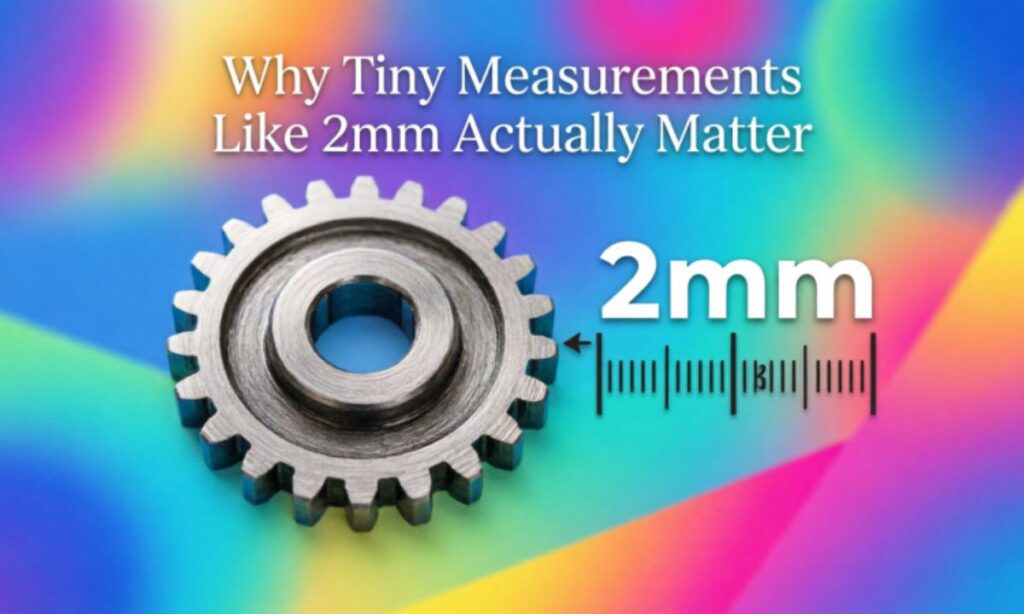
It is easy to assume something this small does not matter much, but 2mm level precision shows up in serious places.
Watchmakers, jewelers, and electronics manufacturers work within fractions of a millimeter because even a small error can mean a part does not fit.
In medical tools, a 2mm difference can matter for things like needle gauges or implant sizing, where accuracy is not optional.
How to Measure 2mm Without a Ruler
Not every situation gives you access to a ruler, so here are quick ways to estimate 2mm using things you already have.
• Compare it to a sharpened pencil tip
• Check the edge of a coin from your pocket
• Look at a small jewelry bead or seed bead
• Pinch a slim charging cable between two fingers
• Use a sesame seed from your kitchen as a quick visual guide
None of these give you lab level precision, but they are accurate enough for quick estimates around the house or while shopping online.
Common Misconceptions About 2mm
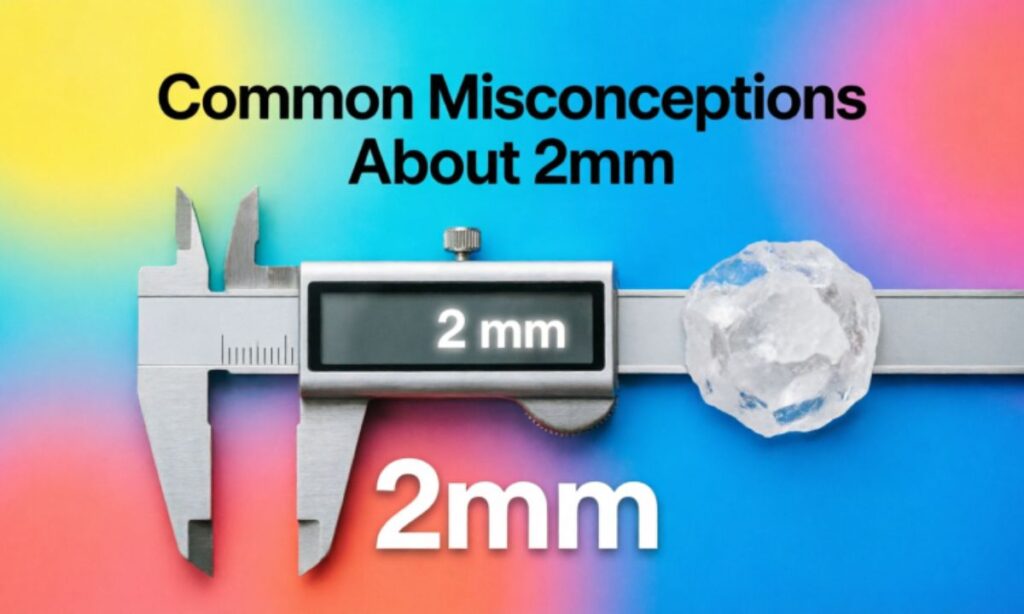
2mm is basically invisible. This is not true. It is small, but still clearly visible to the naked eye, especially against a plain background.
2mm and 2cm are close in size. They are not close at all. 2cm equals 20mm, ten times larger than 2mm.
Tiny measurements do not matter in real projects. This is false too. Precision at the millimeter level matters constantly in jewelry, electronics, sewing, and manufacturing.
FAQs
How long is 2mm? 2mm equals 0.2 centimeters or about 0.078 inches.
Is 2mm very small? Yes, 2mm is extremely small, though still visible without any magnification.
What does 2mm look like? It looks similar to a pencil tip, a coin’s edge, a sesame seed, or a small jewelry bead.
What everyday things are 2mm in size? Small screws, zipper teeth, coin edges, sesame seeds, and certain pencil leads all measure close to 2mm.
Can I estimate 2mm without a ruler? Yes, comparing it to a coin edge, sesame seed, or small bead gives a reliable visual estimate.
Is 2mm bigger than 1mm? Yes, 2mm is exactly double the size of 1mm.
Conclusion
A 2mm size might sound too small to matter, but it shows up constantly once you start noticing it, from the coin in your pocket to the sesame seed on your bun.
Comparing tiny measurements to familiar objects turns an abstract number into something you can actually picture and remember.
Whether you are shopping for jewelry supplies, fixing glasses, sewing a button, or just curious, these thirteen comparisons give you a fast, reliable way to picture exactly how big 2mm really is.