
You’re staring at a product listing and it says “7 inches.”
You have no ruler nearby and no clue what that actually looks like.
Sound familiar? You’re not alone, most people freeze the second a measurement shows up without a picture next to it.
This guide fixes that. No ruler needed, just real objects you already touch every day.
How Long Is 7 Inches?
Seven inches is 17.78 centimeters, or 0.58 feet, or 177.8 millimeters if you want to get specific.
Picture a large phone standing upright, or a TV remote lying flat on your coffee table. That’s your seven inches.
It’s not tiny and it’s not huge either. It sits right in that “fits in your hand but still has some length to it” zone.
Think of it like the space between your thumb tip and pinky tip when you stretch your hand wide. Close, but we’ll get into why that’s not exact later.
7 Inches Conversion Chart
Quick numbers so you don’t have to do math mid scroll.
| Unit | Converted Value |
| Feet | 0.58 ft |
| Centimeters | 17.78 cm |
| Millimeters | 177.8 mm |
| Meters | 0.178 m |
Bookmark this table if you’re the type who converts measurements at 2am for a shopping cart. No shame, we’ve all been there.
Common Things That Are About 7 Inches Long
Here’s your cheat sheet before we dive into detail on each one.
| Common Item | Approximate Length |
| Standard pencil | 7 inches |
| Large smartphone | 6.7 to 7 inches |
| TV remote control | 7 inches |
| Paperback book | 7 inches |
| Banana | 6 to 7 inches |
| Hairbrush | 7 inches |
| Small tablet screen | 7 inches diagonal |
| Notebook width | 7 inches |
| Dinner fork | 7 inches |
| Hand span | 6.5 to 8 inches, varies by person |
| Kitchen spatula blade | 7 inches |
| Small ruler | 7 inches |
| Wallet (open) | 7 inches |
| Screwdriver shaft | 6 to 7 inches |
| Dessert plate diameter | 7 inches |
| Sunglasses (unfolded) | 7 inches |
Notice a few of these say “around” instead of a flat number. That’s on purpose, real objects don’t come in one exact size, and we’ll flag where that matters most.
also read:Arch Aplin Architecture: Home Design and Key Dimensions
How Big Is 7 Inches?
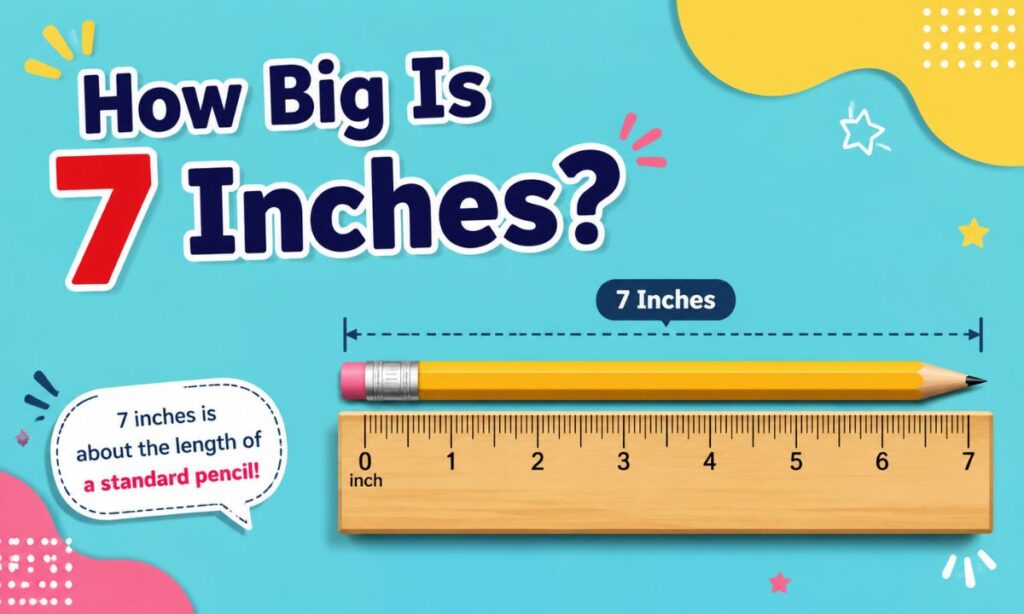
Seven inches is a medium sized measurement. You’ll spot it constantly once you know what to look for, in kitchen tools, electronics, books, and accessories.
It’s long enough to need two hands for some tasks but short enough to slide into a bag or drawer without a second thought.
Here’s the quick mental shortcut, a large phone stood on end, a TV remote lying flat, or a pencil before it ever meets a sharpener. All three land close to seven inches.
Keep one of these in your head and you’ll never need to squint at a measurement label again.
1. Standard Pencil
Grab a fresh, unsharpened pencil from your drawer. That’s your seven inches right there.
Pencils are one of the most reliable size comparisons because they barely change. A brand new No. 2 pencil measures right around 7 to 7.5 inches before the first sharpening shaves it down.
Lay it flat next to anything you’re trying to size up, a phone case, a notebook, a spice jar. It just works.
2. Large Smartphone
Most big screen phones land between 6.7 and 7 inches tall, measured from top to bottom, not diagonally.
Think of an iPhone Pro Max or a Galaxy Ultra sitting in your palm. That length is basically your seven inch benchmark, already in your pocket.
Compare that to a smaller phone around 5.5 inches and the size difference becomes obvious fast. Once you notice it, you can’t unsee it.
3. TV Remote Control
Pick up your living room remote. If it’s one of the bigger universal ones, you’re holding roughly seven inches.
Remotes are shaped this way on purpose, long enough to house all those buttons, short enough to grip one handed from the couch.
Next time you’re organizing a drawer or a media console, use the remote as your gut check for what will actually fit.
4. Paperback Book
Most paperback novels run close to seven inches tall, sometimes a touch under depending on the publisher.
That size hits a sweet spot, big enough to read comfortably, small enough to toss in a bag for the train or a flight.
Stand one upright on a shelf and you’ve got an instant, no math needed size reference for anything else nearby.
5. Banana
Here’s a myth worth busting, bananas are not always exactly seven inches. Average length actually falls between 5 and 7 inches, depending on ripeness and variety.
A banana on the longer end of that range gets you close to seven inches, but don’t expect every bunch at the grocery store to match perfectly.
It’s still a fun, relatable comparison though, and one you can literally hold in your kitchen right now to test.
6. Hairbrush
Compact and travel style hairbrushes commonly measure around seven inches from handle tip to bristle end.
Because you handle one every single morning, this comparison sticks in your memory without any effort.
Lay it across a drawer or toiletry bag and you’ll instantly know if your seven inch item will fit alongside it.
7. Small Tablet Screen
Here’s where people get tripped up, a seven inch tablet screen is measured diagonally, corner to corner, not straight across.
That means the actual device is wider and taller than seven inches once you account for the frame and bezel around the screen.
So if you’re shopping for a small tablet, don’t assume the whole gadget is seven inches long. The screen is, the device isn’t.
8. Notebook Width
Plenty of standard notebooks measure close to seven inches across the width, especially the compact, spiral bound kind.
That width gives you enough room to write comfortably while keeping the notebook small enough to stuff in a backpack pocket.
Lay one flat on your desk sideways and you’ve got a fast, physical way to eyeball anything else you’re measuring.
9. Dinner Fork
A standard dinner fork typically runs about seven inches from tip to handle end.
You’ve used one at nearly every meal, so this measurement is already baked into your muscle memory whether you realized it or not.
Set one down flat next to a spice rack or drawer organizer and you’ll know instantly what will and won’t fit.
10. Hand Span
Stretch your hand out, thumb to pinky, as wide as it goes. For a lot of adults, that lands somewhere between 6.5 and 8 inches.
This is where things get personal, hand size varies a ton depending on height, age, and whether you’re comparing an adult hand to a kid’s.
It’s a handy trick in a pinch, literally, but don’t treat it as gospel. Your hand span might run shorter or longer than someone else’s by a full inch or more.
11. Kitchen Spatula Blade
The flat, flipping part of many kitchen spatulas measures close to seven inches long, not counting the handle.
Cooking tools like this are great reference points because you’re already holding them constantly while flipping pancakes or searing something in a pan.
Next time you’re eyeing a new cookware set, hold up a spatula and compare before you buy blind.
12. Small Ruler
Some compact rulers are manufactured at exactly seven inches, built specifically for smaller bags, pencil cases, or tight desk drawers.
Since rulers exist purely for measuring, this is about as accurate a comparison as you’ll find on this whole list.
If you own one, keep it in your bag. It doubles as your go to gut check for any object you’re trying to size up on the fly.
13. Wallet (Open)
Unfold a typical bifold wallet all the way and you’ll land close to seven inches across.
This one sneaks up on people because you carry a wallet constantly but rarely think about its actual dimensions.
Next time you’re shopping for a bag or drawer organizer, unfold your wallet as a quick, no tools needed test.
14. Screwdriver Shaft
The metal shaft on a standard screwdriver, not counting the handle, usually falls between six and seven inches.
That length gives you enough reach to get into tight spots during a repair job without the tool feeling clunky or awkward.
If you’re a weekend DIY type, this is one of the easiest tools to eyeball a measurement against since you probably already own a few.
15. Dessert Plate Diameter
Most dessert or side plates measure close to seven inches across, corner to corner if it’s square, or straight through if it’s round.
Because plates are circular or symmetrical, they help you picture both width and diameter in one glance.
Next time you’re planning table settings or measuring cabinet space, a dessert plate gives you an instant, no guesswork reference.
16. Sunglasses (Unfolded)
Unfold a pair of sunglasses completely and measure from one hinge to the other. Many pairs land right around seven inches.
Their symmetrical shape makes this one of the easier comparisons to picture clearly in your head.
Useful next time you’re eyeing a smaller storage case or travel pouch and want to know if your sunglasses will actually fit.
7 Inches Compared to Everyday Objects
Sometimes numbers alone don’t click until you line things up side by side.
Seven inches is slightly taller than most smartphones, close to the height of a paperback book, and just a bit longer than a standard dinner fork.
It’s shorter than a standard ruler at 12 inches but noticeably longer than a credit card, which only runs about 3.4 inches.
Lining up a few of these mentally, phone next to book next to fork, gives you a fast, reliable sense of scale without ever touching a measuring tape.
How to Estimate 7 Inches Without a Ruler
No ruler in sight? No problem, you’ve got backup options everywhere.
● Use your phone standing upright as a rough guide
● Grab a pencil and lay it flat
● Stretch your thumb and pinky as wide as they’ll go
● Picture your TV remote lying on the table
● Compare against a paperback book standing up
These tricks come in handy while shopping online, rearranging furniture, or tackling a random DIY project on a Saturday afternoon.
Got a go to trick of your own for eyeballing measurements? Drop it in the comments, we’d genuinely love to hear it.
Common Misconceptions About 7 Inches
1. Seven Inches Is Very Small
A lot of people hear “seven inches” and picture something tiny. That’s just not accurate.
Seven inches is a solid, noticeable medium sized measurement, showing up constantly in electronics, tools, and everyday accessories.
Once you start noticing it, seven inches feels a lot bigger in real life than it sounds on paper.
2. Screen Size Means Device Length
Here’s a big one, a seven inch screen is measured diagonally, corner to corner. It is not the actual length or width of the device itself.
That means a seven inch tablet is physically bigger overall once you factor in the bezel and frame around the display.
Keep this in mind next time you’re comparing gadgets online so you don’t end up surprised when the box arrives.
3. Estimating Measurements Is Always Easy
Without something familiar to compare against, most people guess wrong, either way too big or way too small.
That’s exactly why real object comparisons, like the pencil, the fork, or the phone, matter so much more than the raw number alone.
Next time you’re stuck estimating something, skip the guesswork and reach for one of these everyday items instead.
FAQs
How long is 7 inches in centimeters?
Seven inches equals 17.78 centimeters.
What household items are 7 inches long?
Pencils, TV remotes, paperback books, dinner forks, and hairbrushes are common examples.
Is 7 inches a common measurement?
Yes, it shows up constantly in electronics, kitchen tools, books, and personal accessories.
Is a banana really 7 inches long?
Not always. Bananas typically run between 5 and 7 inches, so seven inches is on the longer end, not the average.
Is a 7 inch screen actually 7 inches long?
No. Screen size is measured diagonally, so the actual device is bigger than 7 inches once you include the frame.
Why does hand span vary so much?
Hand size depends on height, age, and genetics, so a seven inch hand span is common but far from universal.
Conclusion
Seven inches stops being an abstract number the second you connect it to something you already touch every day.
A pencil, a phone, a fork, a wallet, all of these give you an instant, no ruler needed sense of scale.
Next time a listing says seven inches, you won’t have to guess. You’ll already know exactly what that looks like.
Got a favorite comparison we missed? Share it below, this list only gets better with more real world examples.