
You look at the clock and ask yourself what time is 12 hours from now, and for a second your brain just goes blank. Maybe you are catching a night flight, taking medicine on a schedule, or waiting for a 12 hour shift to end.
Here is the quick answer right up front. Keep the minutes exactly the same and flip AM to PM or PM to AM. So if it is 4:15 PM right now, 12 hours from now it will be 4:15 AM.
This guide covers the 12 hour clock, the 24 hour clock, common mix ups, and real situations where this small calculation actually saves you from a scheduling mess. Stick with it, because the small details matter more than most people think.
What Time Is 12 Hours From Now? Understanding the Basics
The basics here are genuinely simple. Take your current time, add 12 hours, and swap AM for PM or PM for AM. The minute number never moves at all.
For example, 6:00 AM becomes 6:00 PM, and 9:30 AM becomes 9:30 PM. Noon at 12:00 PM turns into midnight at 12:00 AM, and midnight turns into noon the next day.
People overthink this way more than they need to. Once you have seen the pattern a few times, your brain just knows it without any real math involved.
Why Adding 12 Hours Is Different From Other Time Calculations
Adding 5 hours or 8 hours moves you partway around the clock. Adding 12 hours moves you exactly halfway, and that is why it feels different from other time calculations.
Picture the clock as a circle with 24 hours total. Travel halfway around that circle and you land on the same hour and the same minute, just on the opposite side of the day.
That pattern is what makes the 12 hour time calculation so predictable compared to odd numbers like 7 or 9 hours, where the actual hour number changes too.
What Time Is 12 Hours From Now Using the 12-hour Clock
Most people use the 12 hour clock with AM and PM every single day. The rule stays the same no matter which time you start with.
1:00 AM becomes 1:00 PM, 7:00 AM becomes 7:00 PM, and 11:45 PM becomes 11:45 AM the next day. Every AM time flips to the matching PM time, and every PM time flips to the matching AM time on the following day.
This is exactly why the 12 hour clock works so well for quick mental math. You are never guessing at a new number, only switching the letters.
| Current Time | 12 Hours Later |
| 1:00 AM | 1:00 PM |
| 4:00 AM | 4:00 PM |
| 9:00 AM | 9:00 PM |
| 12:00 PM (Noon) | 12:00 AM (Midnight) |
| 3:00 PM | 3:00 AM (Next Day) |
| 11:45 PM | 11:45 AM (Next Day) |
What Time Is 12 Hours From Now on a 24-hour Clock
Airlines, hospitals, and the military often use the 24 hour clock to avoid AM and PM confusion altogether. The math underneath still works the same way.
On this clock, 00:00 becomes 12:00, 05:00 becomes 17:00, and 14:15 becomes 02:15 the next day. You are simply adding 12 to the hour number, and wrapping past 24 when needed.
If your job or travel plans use this system, practice a few examples on your own. It removes any doubt about whether a time falls in the morning or the night.
ALSO READ THIS:https://measureaxis.com/what-time-was-it-12-hours-ago/
The Simple Formula Behind 12-Hour Time Calculation
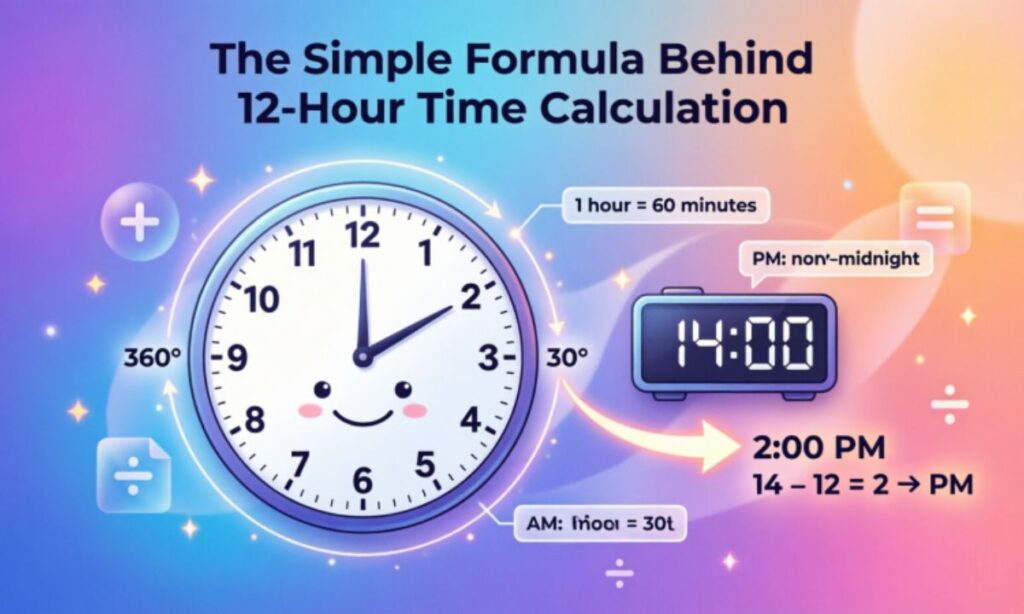
Here is the whole formula in plain steps. Take the current time, add 12 hours, keep the minutes exactly the same, and flip AM to PM or PM to AM.
For example, 8:42 AM plus 12 hours is 8:42 PM. And 10:15 PM plus 12 hours is 10:15 AM the next day.
If the calculation crosses midnight, remember that the calendar date changes too. That single detail trips up more people than the actual math ever does.
Understanding AM, PM, Noon, and Midnight
A lot of mistakes start right here. 12:00 AM is midnight, and 12:00 PM is noon, not the other way around.
Everything after midnight up to noon counts as morning. Everything after noon moves into afternoon, then evening, then night.
Keep these two markers straight and the rest of your time math gets a lot easier. It sounds small, but it is where most of the confusion actually begins.
Real-Life Situations Where You Need to Add 12 Hours
This calculation shows up more often than people realize. Nurses and factory workers track 12 hour shifts with it, and travelers use it to figure out overnight flight arrivals.
Parents use it for school reminders and exam prep timing. Remote teams scattered across the globe often schedule calls exactly 12 hours apart, since it is the easiest gap for everyone to remember.
Even something as simple as taking medicine every 12 hours depends on this math. Get it wrong and you either take a dose too early or wait far too long.
Shift work: nurses, security staff, and factory workers plan meals and rest around it
Sleep cycle: waking up naturally after 12 hours of rest during recovery
Travel planning: figuring out landing times for overnight flights
School schedule: setting reminders for homework or exam prep
Office meetings: syncing calls between teams on opposite sides of the world
Pakistan and GMT+5 Time Zone
Readers in Pakistan work off GMT plus 5, but the 12 hour rule does not change based on where you live. It works the exact same way in Karachi, Lahore, Islamabad, or anywhere else in the country.
For example, 8:20 AM in Pakistan becomes 8:20 PM later the same day. You are only moving forward in local time, not converting between two different time zones.
This matters when you are chatting with someone abroad. Your own local time still follows the same simple flip, even while the other person’s clock might read something completely different.
Common Mistakes People Make
Even a simple calculation trips people up sometimes. The most common slip is forgetting to switch AM and PM, or mixing up noon with midnight.
Others accidentally change the minutes, which should never happen in this kind of math. Some also forget that crossing midnight bumps the date forward by a full day.
Mixing the 12 hour clock with the 24 hour clock in the same calculation is another classic mistake. Stick to one system at a time and you will avoid most of these slip ups.
Forgetting to switch AM and PM
Confusing noon with midnight
Accidentally changing the minutes
Ignoring the date change after midnight
Mixing the 12 hour and 24 hour clocks in one calculation
Manual Time Arithmetic vs Online Calculators
You really have two solid options here, doing the math yourself or letting a tool handle it. Manual calculation is fast, works without the internet, and helps you actually understand the pattern.
Online tools like a time difference calculator or a date and time calculator come in handy for trickier jobs, like adding multiple days or working across time zones. They also cut out human error when precision really matters.
For simple day to day questions, your own head is usually enough. Save the calculator for messier calculations involving weeks, months, or international schedules.
| Manual Method | Online Calculator |
| Fast for simple, everyday time checks | Better for multi day or multi week calculations |
| No internet needed | Handles time zone conversions automatically |
| Builds real understanding of the pattern | Removes the risk of human error |
| Best for quick daily use | Best for travel, payroll, or scheduling tools |
Why Humans Perceive 12 Hours Differently
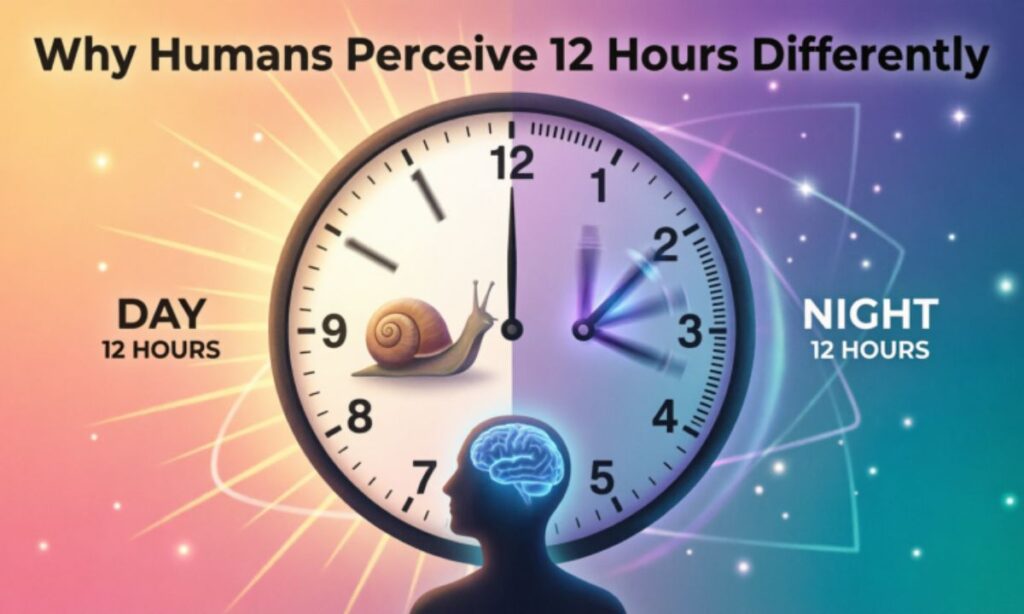
Twelve hours on a clock never feels the same in real life. Waiting through an exciting event flies by, while the 12 hours before a big interview can absolutely crawl.
Researchers who study time awareness say our internal sense of time rarely matches the actual clock. Anticipation stretches minutes, while distraction shrinks them without us even noticing.
One parent once said the 12 hours before meeting their newborn felt longer than the nine months before it. Small stories like that show how flexible our sense of time really is, even while the clock itself stays perfectly steady.
Examples of Everyday 12-Hour Calculations
Practice really does make this second nature. If it is 6:15 AM right now, 12 hours from now is 6:15 PM.
If it is 11:45 PM, the answer is 11:45 AM tomorrow. If it is 2:30 PM, you land at 2:30 AM the next day.
Run through a handful of these and the pattern locks in fast. Soon you will not even pause to think about it.
| Current Time | 12 Hours From Now |
| 6:15 AM | 6:15 PM |
| 11:45 PM | 11:45 AM (Next Day) |
| 2:30 PM | 2:30 AM (Next Day) |
| 9:05 PM | 9:05 AM (Next Day) |
| 12:10 AM | 12:10 PM |
Quick Tips to Master 12 Hour Time Calculation
A few small habits make this math almost automatic. Try these next time you need a quick answer.
Say it out loud: repeating the flip from AM to PM helps it stick faster
Anchor to noon and midnight: these two points are where most errors happen
Check the date: always confirm if the calculation crosses into the next day
Practice with your own schedule: use your wake up time or shift start time as a daily drill
Use a calculator for travel: time zone changes add a layer that manual math can miss
Expert Advice on Getting Time Calculations Right
People who work night shifts or manage global teams learn this math the hard way, through real mistakes. Their advice usually comes down to slowing down for a second before confirming any schedule.
Nurses managing 12 hour rotations often double check the date, not just the hour, since a shift that starts at 7:00 PM and ends at 7:00 AM technically spans two calendar days. Travelers dealing with overnight flights use the same trick when checking arrival times against departure times.
The common thread among people who rarely make mistakes here is simple. They treat the date change across midnight as seriously as the AM and PM flip itself.
Why Understanding Time Matters
This tiny calculation quietly supports a lot of daily life. It helps with scheduling, travel planning, shift work, and even simple things like knowing when a reminder should go off.
Small mix ups with time create real inconveniences, like missing a call with an overseas client or mistiming medication. Getting comfortable with this math prevents those little headaches before they start.
The more you use it, the more automatic it becomes. That is really the whole point of learning it properly instead of guessing every single time.
10 Common Things People Ask About 12 Hours From Now
Does adding 12 hours always change AM to PM? Yes, that flip happens every single time
Do the minutes ever change? No, the minute number always stays exactly the same
Is 12 PM midnight? No, 12 PM is noon and 12 AM is midnight
Does the date change? Only if the calculation crosses over midnight
Is this the same in every time zone? Yes, the local math never changes based on location
Can this help with medicine schedules? Yes, many prescriptions are spaced exactly 12 hours apart
Do pilots use this math? Yes, along with the 24 hour clock for extra clarity
Is mental math reliable here? Yes, for simple single day checks it works fine
When should I use a calculator instead? When the schedule spans multiple days or time zones
Why do people still get confused? Mostly from mixing up noon, midnight, and the date change
Frequently Asked Questions
Is adding 12 hours always the same hour? Yes, only AM or PM changes while the minutes stay exactly the same.
Does adding 12 hours change the day? Sometimes, and only if the calculation crosses midnight into the next calendar day.
What is the easiest way to remember this? Same hour, same minutes, opposite AM or PM. That is really the entire rule.
Can online tools help with this? Yes, a reliable time calculator is useful for anything involving multiple days or different time zones.
Conclusion
Asking what time is 12 hours from now looks like a tiny question, but it quietly sits behind work schedules, travel plans, medicine routines, and everyday conversations across the globe. The core idea never changes, add 12 hours, keep the minutes the same, and flip AM to PM or PM to AM.
Whether you are using a 12 hour clock, a 24 hour clock, or a quick online calculator, this simple habit saves you from real scheduling headaches. Next time someone asks what time it will be in 12 hours, you will already know the answer without hesitation.
Got a trick of your own for calculating time, or a funny story about mixing up AM and PM? Share it in the comments below, and pass this guide along to anyone who could use a quick refresher.